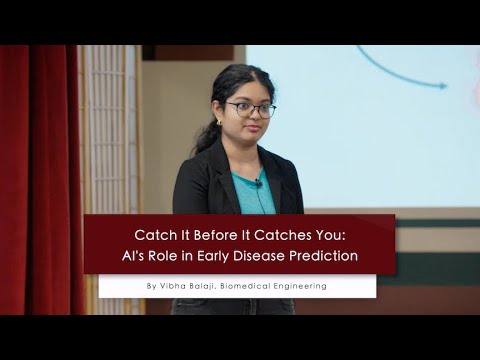
This research uses artificial intelligence to predict the progression of Alzheimer’s disease and cancer using medical imaging data. By analyzing brain scans, tumor scans, and treatment responses, AI models can forecast disease development and treatment outcomes, enabling earlier intervention, more personalized care, and improved quality of life for aging populations.
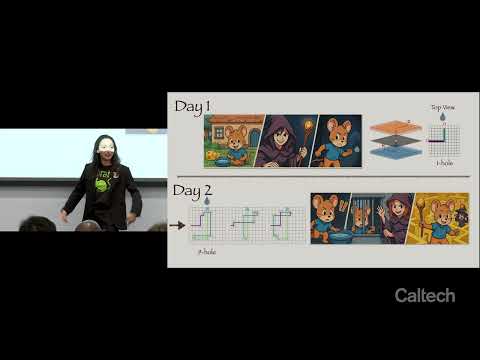
This research uses the Manhattan maze to study rapid learning and memory in mice. The study demonstrates that mice can acquire complex navigation sequences after only a few rewards, retain memories overnight, and generalize learned strategies to new mazes. The findings provide insights into few-shot learning, memory formation, and adaptive intelligence.
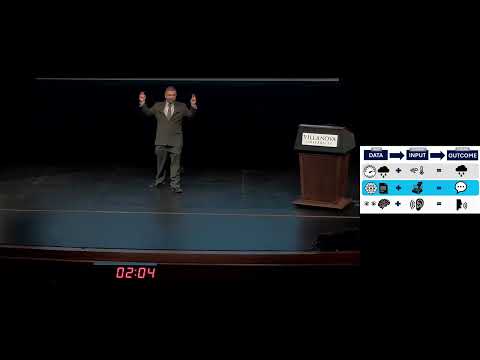
Generative AI chatbots are predictive systems that generate human-like responses without true understanding. Using large datasets, they model word relationships similarly to weather forecasting. While effective, they can produce convincing inaccuracies, or “hallucinations.” This research emphasizes interpreting AI realistically—as probabilistic tools with limitations—rather than attributing human cognition to them.
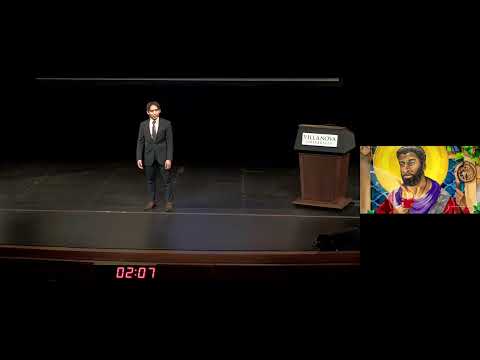
This research critiques AI-based classroom monitoring, arguing that while algorithms can measure behavior, they cannot interpret meaning. It proposes the “Augustinian limit,” where AI supports logistics but human judgment guides interpretation. The framework protects authentic learning moments, emphasizing that true education relies on human insight, not just data-driven evaluation.
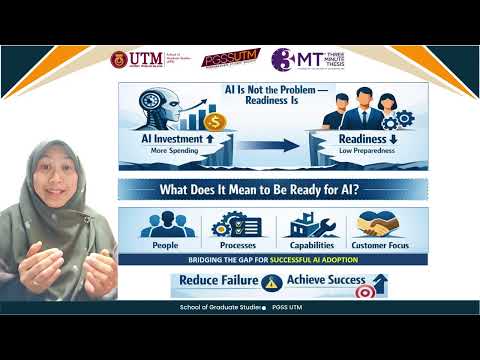
This research investigates why many organizations fail to implement AI effectively, focusing on readiness rather than technology. In automotive after-sales services, it identifies gaps between systems and AI ambitions. The study develops a framework aligning people, processes, and capabilities, helping organizations achieve sustainable and successful AI adoption.
This research investigates asthma’s underlying mechanisms, focusing on airway fibrosis and the extracellular matrix. Using Raman spectroscopy, researchers generate molecular “barcodes” of lung tissue. Artificial intelligence is then applied to analyze complex data, aiming to identify key biological drivers of asthma and move beyond temporary treatments toward deeper understanding and potential long-term solutions.
This research uses AI to detect subtle interactions between the Higgs boson and muons at the Large Hadron Collider. By refining large datasets, it aims to uncover how particles acquire mass at smaller scales. Confirming this interaction would deepen understanding of the Higgs field and fundamental physics.
AI can improve efficiency in humanitarian aid but risks undermining its moral foundation. Research shows donors perceive AI as lacking empathy, leading to reduced engagement and donations. The key challenge is balancing technological efficiency with human connection, ensuring that innovation supports rather than erodes the trust and compassion that sustain aid systems.
AI can answer religious questions, but it often blends traditions and provides incomplete answers. While specialized models exist, general models like ChatGPT can perform better due to broader training data. The key insight is that theology remains a human, dialogical process—AI should assist, not replace, human judgment and interpretation.
This research develops context-aware AI integrated with extended reality glasses, enabling systems to perceive and interact within real-world environments. Applications include language learning and memory support. Findings show such AI fosters more natural, collaborative interactions, enhancing human perception, memory, and decision-making beyond traditional screen-based interfaces.
Pagination
- Previous page
- Page 4
- Next page