This research investigates how differences in butterfly behavior relate to brain evolution and memory. Heliconius butterflies showed superior long-term memory and enlarged mushroom body brain regions compared with related species. The work explores how neurogenesis shapes cognition and may ultimately contribute to understanding memory, brain development, and neurological disorders.
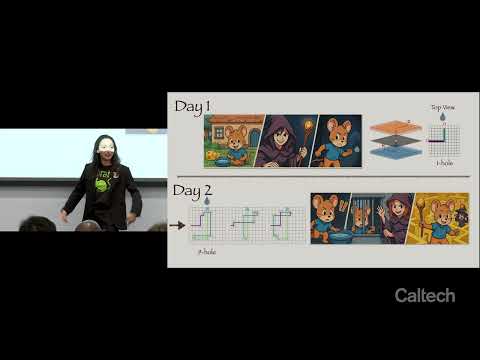
This research uses the Manhattan maze to study rapid learning and memory in mice. The study demonstrates that mice can acquire complex navigation sequences after only a few rewards, retain memories overnight, and generalize learned strategies to new mazes. The findings provide insights into few-shot learning, memory formation, and adaptive intelligence.
This research investigates the role of force feedback in virtual reality training. By comparing users with and without haptic feedback, it examines effects on brain activity, skill acquisition, and real-world performance. The study aims to improve VR training systems by incorporating sensory input essential for effective motor learning and skill transfer.
This research improves neural implants for vision restoration by reproducing natural brain activity patterns. Using a two-way stimulation approach in the retina, electrical signals are optimized to activate neurons precisely. This enables more accurate visual perception, moving beyond crude light flashes toward meaningful vision, with potential to restore recognition of familiar faces.
This research shows that pauses in information streams alter decision-making. After a break, the brain increases effort, giving greater weight to subsequent information—a “peak-after-break” effect. A computational model explains this as a performance-effort tradeoff. Findings challenge traditional theories and suggest strategic pauses can shape attention, memory, and judgment.
This research uses nematode worms and machine learning to quantify changes in neuron structure linked to neurodegenerative diseases. By replacing subjective visual analysis with objective computational methods, it identifies structural abnormalities and improves understanding of disease mechanisms, supporting future advances in diagnosis and treatment.
This research shows that children born without a hand can generate complex muscle signals by imagining movements, enabling control of advanced prosthetics. Their abilities develop similarly to typical motor patterns, challenging assumptions and expanding access to sophisticated prosthetic technology for paediatric patients.
This research investigates how sign language experience reshapes the brain’s visual system. MRI studies show expanded hand-processing regions and reorganised face areas in both deaf and hearing signers, even when learning occurs in adulthood. The findings highlight neural plasticity and reveal how visual language transforms perception and brain organisation.
In our complex world, how do humans learn and make decisions when their cognitive resources are limited? My thesis introduces a new theory called "policy compression" to answer this question! The basic idea is that people simplify their decision-making processes to reduce the mental effort required, without significantly compromising the benefits or rewards of those decisions. I use computational modeling, human experiments, and brain studies in rats to explain why people exhibit certain decision-making patterns, like the tendency to stick with familiar choices, and why they use strategies like "chunking" to reduce mental load. I also propose that different brain regions work together to balance mentally taxing decisions with more automatic, habitual decisions. This allows the brain to optimize behavior in complex environments. In conclusion, my thesis offers a new way to understand how humans and animals make decisions with limited mental resources, and shows how the brain organizes itself to handle decision-making efficiently.
This PhD uses brain-inspired AI to decode vision from neural data. Using human fMRI (24 hours of Doctor Who) and monkey electrophysiology, signals are transformed into 2D brain maps to improve reconstruction. The model learns receptive-field structure, compares contributions of V1/V4/IT, and aims for efficient, interpretable decoding with applications to neuroscience and BCIs.
Pagination
- Previous page
- Page 3
- Next page