This research investigates sound symbolism: the relationship between particular speech sounds and perceived meanings. By analysing animal names in English, French, and Spanish, it examines whether consonants, vowels, and syllable stress correspond with characteristics such as size and danger, helping explain language evolution and potentially informing language learning and word creation.
2026
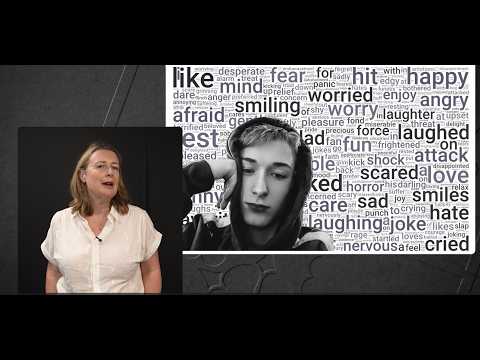
This research investigates whether teenagers miss important socio-emotional development when they stop reading fiction. Using a 2.4 million-word corpus compiled from books read by nearly 700 adolescents, it found rich emotional vocabulary and physical descriptions of emotions that may strengthen emotion recognition, emotional regulation, empathy, and adolescent mental health.
This research challenges the long-standing assumption that brain regions causing no errors during awake brain surgery are functionally unimportant. By measuring subtle delays in speech rather than errors alone, it introduces causal parametric mapping, offering surgeons a more sensitive way to preserve language function and improve patient outcomes.
This research investigates sound length in speech, comparing its physical and mental representation across languages. While English treats length as phonetic variation, languages like Japanese use it meaningfully. The study focuses on Persian to improve speech recognition and therapy, helping determine how sound duration is perceived, produced, and processed cognitively.
2026
This research investigates how sign language experience reshapes the brain’s visual system. MRI studies show expanded hand-processing regions and reorganised face areas in both deaf and hearing signers, even when learning occurs in adulthood. The findings highlight neural plasticity and reveal how visual language transforms perception and brain organisation.
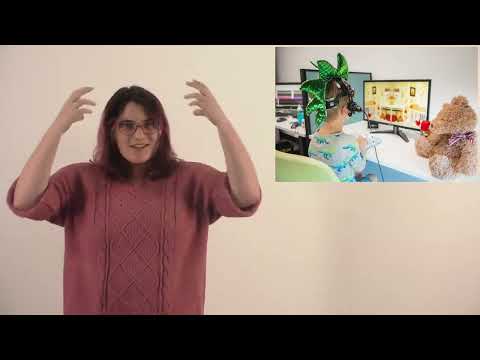
This research investigates how children use the left and right hemispheres for language and spatial reasoning. Using ultrasound while children play custom games, it shows that those with the typical left-language/right-spatial pattern tend to have stronger skills. The findings reveal how brain-activity patterns relate to developmental risks and complex tasks like reading.