
This research challenges the long-standing assumption that brain regions causing no errors during awake brain surgery are functionally unimportant. By measuring subtle delays in speech rather than errors alone, it introduces causal parametric mapping, offering surgeons a more sensitive way to preserve language function and improve patient outcomes.
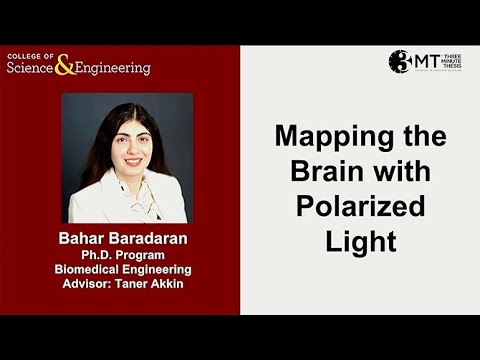
Tiny errors in electrode placement can determine success or failure of Parkinson’s surgery. This research develops high-resolution Polarization Sensitive Optical Tomography to map brain anatomy at micrometer scale—over 100 times finer than MRI. Automated scanning and 3D reconstruction create detailed connectivity maps, improving surgical precision and neuroscience understanding.