This 3MT® presentation describes how artificial intelligence can help non-specialist clinicians diagnose deep vein thrombosis using AI-guided handheld ultrasound devices. By enabling faster point-of-care diagnosis in GP surgeries, the project aims to reduce hospital referrals, improve accessibility for vulnerable patients, and help healthcare systems manage increasing clinical demand more efficiently.
This research develops adaptable machine learning methods for wildlife monitoring using camera trap images. By clustering visually similar animal images, the system dramatically reduces the amount of manual labeling required while maintaining accuracy. The approach could enable faster, large-scale biodiversity monitoring critical for protecting endangered species worldwide.

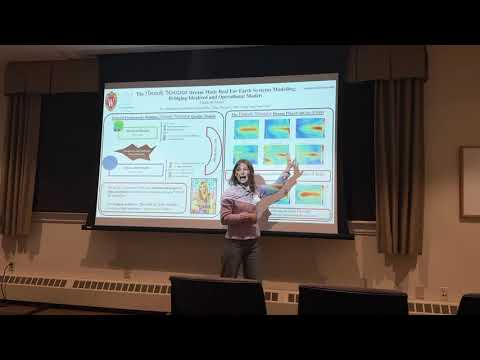
This research develops a machine-learning and data-assimilation framework that combines idealized and operational Earth systems models into a high-resolution, physically realistic “bridging model.” Applied to the El Niño–Southern Oscillation, the approach improves climate simulation accuracy while enabling exploration of alternative climate regimes and physically consistent what-if scenarios.

This research explores how artificial intelligence systems can continue learning without forgetting previously acquired knowledge. Instead of erasing old information, the proposed method compresses knowledge into more efficient representations, allowing AI systems such as self-driving cars to adapt safely to new environments while avoiding dangerous performance failures during learning.

This research uses artificial intelligence to predict the progression of Alzheimer’s disease and cancer using medical imaging data. By analyzing brain scans, tumor scans, and treatment responses, AI models can forecast disease development and treatment outcomes, enabling earlier intervention, more personalized care, and improved quality of life for aging populations.

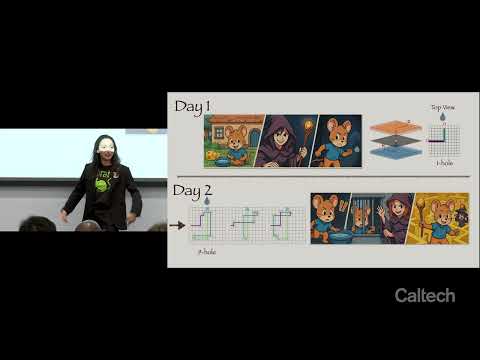
This research uses the Manhattan maze to study rapid learning and memory in mice. The study demonstrates that mice can acquire complex navigation sequences after only a few rewards, retain memories overnight, and generalize learned strategies to new mazes. The findings provide insights into few-shot learning, memory formation, and adaptive intelligence.

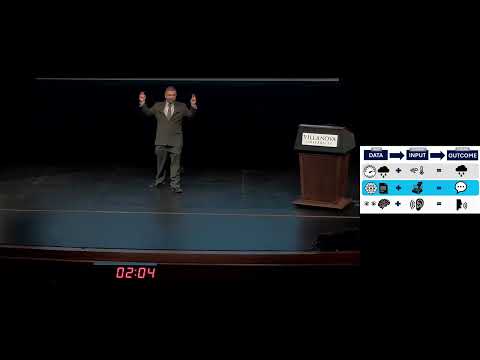
Generative AI chatbots are predictive systems that generate human-like responses without true understanding. Using large datasets, they model word relationships similarly to weather forecasting. While effective, they can produce convincing inaccuracies, or “hallucinations.” This research emphasizes interpreting AI realistically—as probabilistic tools with limitations—rather than attributing human cognition to them.

This research critiques AI-based classroom monitoring, arguing that while algorithms can measure behavior, they cannot interpret meaning. It proposes the “Augustinian limit,” where AI supports logistics but human judgment guides interpretation. The framework protects authentic learning moments, emphasizing that true education relies on human insight, not just data-driven evaluation.

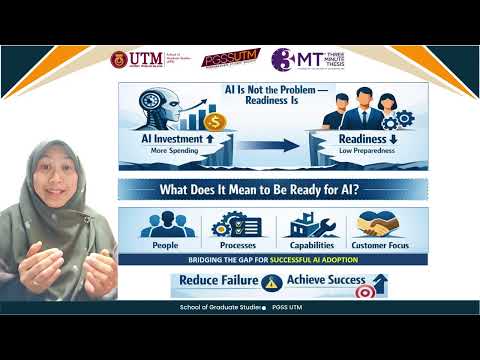
This research investigates why many organizations fail to implement AI effectively, focusing on readiness rather than technology. In automotive after-sales services, it identifies gaps between systems and AI ambitions. The study develops a framework aligning people, processes, and capabilities, helping organizations achieve sustainable and successful AI adoption.