
This research investigates how New Zealand's childhood vision screening programme can better detect and treat vision problems. By trialling more frequent and accurate screening alongside fully funded school-based eye examinations, the project aims to improve eye-care access, reduce inequalities, inform national policy, and ensure every child has the opportunity to see clearly.

2025
This research has developed a five-minute smartphone memory test that detects subtle cognitive changes associated with early Alzheimer's disease. The tool identified symptom-free individuals with underlying disease and predicted future cognitive decline, outperforming expensive brain scans while offering a simple, accessible, and affordable approach to early diagnosis.

This research develops nanobubble-enhanced ultrasound imaging as an accessible alternative to MRI for cancer diagnosis. Tiny gas-filled nanoparticles amplify ultrasound signals and improve image quality, particularly in prostate cancer. The technology could reduce diagnostic delays, lower costs, and provide high-quality medical imaging to more patients worldwide.
2025
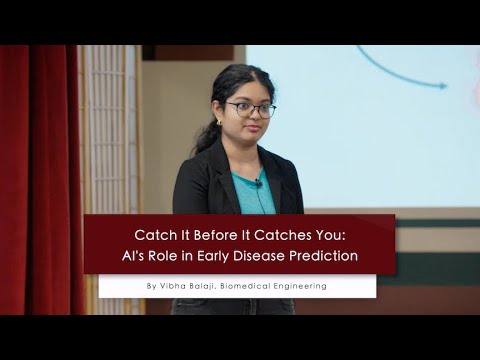
This research uses artificial intelligence to predict the progression of Alzheimer’s disease and cancer using medical imaging data. By analyzing brain scans, tumor scans, and treatment responses, AI models can forecast disease development and treatment outcomes, enabling earlier intervention, more personalized care, and improved quality of life for aging populations.
2026
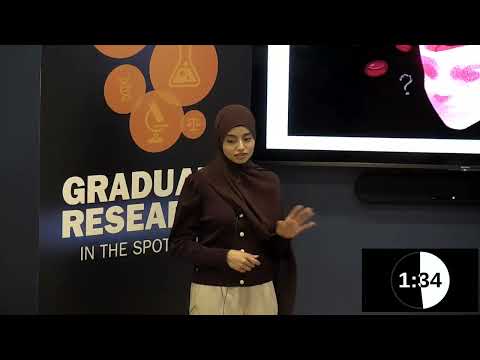
This study explores anemia as a potential risk factor for dementia, finding that nearly half of dementia patients also exhibit low hemoglobin levels, often undiagnosed. By highlighting links between blood health and cognitive decline, the research advocates earlier detection and a multidisciplinary approach to reduce dementia’s growing societal and healthcare burden.

This research uses wearable data and AI to detect disease earlier by analyzing continuous health signals rather than isolated clinical snapshots. By personalizing models to individual baselines, the system identifies subtle changes linked to conditions like infections, heart issues, and mental health crises, enabling earlier intervention and potentially saving lives.
This research develops a nanoparticle-based diagnostic test for thrombotic thrombocytopenic purpura (TTP), a rare and deadly blood disorder. By enabling fast, affordable detection of the ADAMTS13 enzyme, the system could allow earlier diagnosis, timely treatment, and improved survival while inspiring new approaches to rare disease diagnostics.
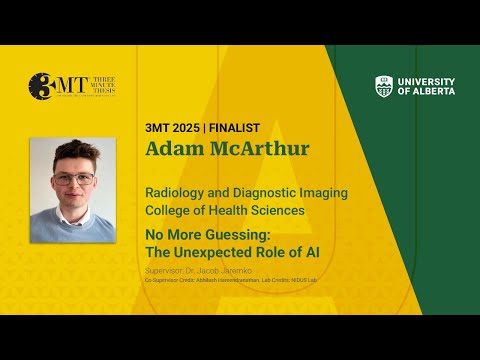
Hip dysplasia is often diagnosed too late or too inconsistently, leading to lifelong pain. The speaker’s research builds the first open-access AI tool for detecting and studying the condition, enabling portable automated diagnosis and global collaboration. By sharing tools instead of guessing, researchers can reduce unnecessary surgeries and improve outcomes worldwide.
Prion diseases like CJD are extremely hard to detect early because harmful prions resemble normal brain proteins. This research introduces a new “flashbody” detection tool that binds only disease-causing prions, providing rapid, accurate, equipment-free diagnosis. Early lab results and patient-screening trials are promising, with potential applications to Alzheimer’s and other dementias.

2024
Bowel cancer kills thousands each year, and current stool-based screening misses many cases. This PhD develops a new non-invasive method that analyzes human cells shed into stool, aiming to detect normal, pre-cancerous, and cancerous changes more accurately. The goal is a more reliable, higher-participation screening tool that could replace the existing national test.