This research examines how CEO personality influences environmental decoupling, where companies misalign environmental claims and actions. Using the Big Five framework and machine learning on CEO communications, it identifies traits linked to such behavior. Findings aim to improve corporate governance by helping stakeholders select leaders committed to genuine sustainability.
This research addresses the exclusion of minority and low-resource languages from modern language technologies. Using linked data principles, it builds interconnected, machine-readable linguistic resources for languages like Cree, Welsh, and Kurdish. The goal is to enable inclusive AI systems and future technologies that support global communication across diverse linguistic communities.
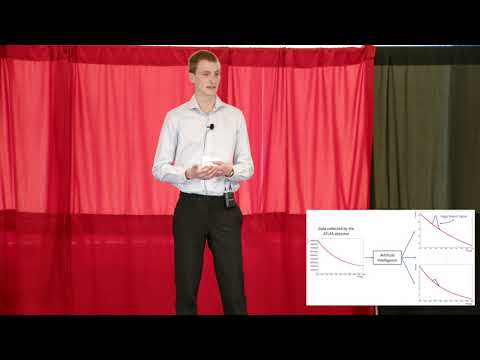
This research uses AI to detect subtle interactions between the Higgs boson and muons at the Large Hadron Collider. By refining large datasets, it aims to uncover how particles acquire mass at smaller scales. Confirming this interaction would deepen understanding of the Higgs field and fundamental physics.
This research shows that toxic behavior in online games is contagious, especially from teammates. Using machine learning and econometric analysis of 300,000 messages, it finds toxicity spreads socially rather than individually. The study suggests that effective interventions should target breaking transmission patterns rather than simply punishing players to improve online environments.
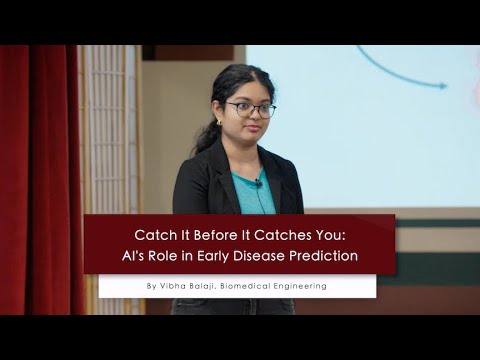
This research uses wearable data and AI to detect disease earlier by analyzing continuous health signals rather than isolated clinical snapshots. By personalizing models to individual baselines, the system identifies subtle changes linked to conditions like infections, heart issues, and mental health crises, enabling earlier intervention and potentially saving lives.
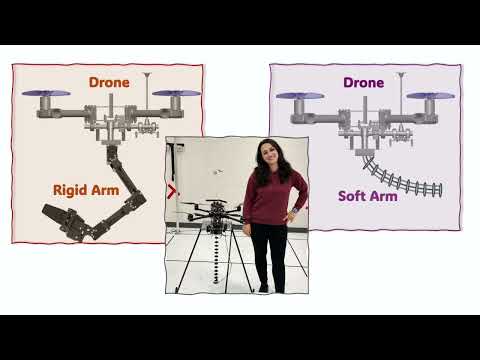
This research develops drones with soft robotic arms capable of safely grasping and transporting objects in challenging environments. By combining predictive modelling with visual feedback, it overcomes control challenges associated with soft materials. The work advances intelligent, adaptive aerial robotics for applications such as emergency delivery and hazardous environments.
This research uses nematode worms and machine learning to quantify changes in neuron structure linked to neurodegenerative diseases. By replacing subjective visual analysis with objective computational methods, it identifies structural abnormalities and improves understanding of disease mechanisms, supporting future advances in diagnosis and treatment.
This research shows that children born without a hand can generate complex muscle signals by imagining movements, enabling control of advanced prosthetics. Their abilities develop similarly to typical motor patterns, challenging assumptions and expanding access to sophisticated prosthetic technology for paediatric patients.
This research uses machine learning to predict trauma demand and optimise hospital scheduling. By forecasting patient volume and dynamically allocating operating rooms, it reduces cancellations, improves efficiency, and lowers costs. The system has the potential to transform healthcare delivery by balancing emergency and elective care more effectively.
This talk traces the devastation of the Black Death to highlight a modern crisis: antibiotic resistance. Misuse of antibiotics accelerates the rise of superbugs. Using AI and machine learning, the research identifies genetic resistance patterns and guides effective treatments, aiming to improve clinical decisions and prevent a return to a pre-antibiotic era.
Pagination
- Previous page
- Page 4
- Next page