This research develops soft, tissue-like implantable sensors capable of monitoring molecular signals inside the body in real time. By combining high-performance electronics with flexible, biocompatible materials, these devices could detect inflammation, stress, or organ damage before symptoms arise, enabling earlier diagnosis and more personalized healthcare.

This research develops antibacterial nanostructured surfaces inspired by natural materials such as cicada wings. The engineered surfaces physically rupture bacteria using nanoscale needle-like structures, avoiding traditional antibiotics and reducing the likelihood of antibiotic resistance. The technology could improve infection control in medical devices, implants, and hospital environments.

This research develops a noninvasive method for continuously measuring blood pressure using arterial resonance. Inspired by the physics of vibrating guitar strings, the device gently stimulates arteries and measures their resonance frequencies with ultrasound. The resulting continuous blood pressure waveforms could improve diagnosis of cardiovascular disease without invasive catheterization procedures.

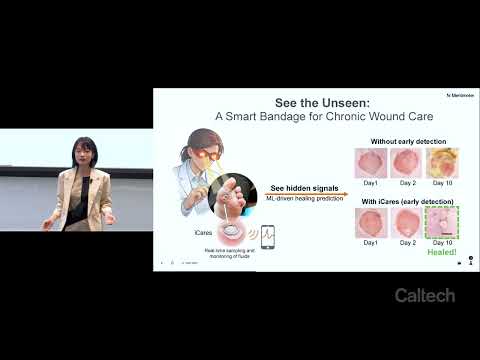
This research introduces iCares, a smart wound-monitoring bandage designed to detect infection and inflammation before visible symptoms appear. Using biosensors, fluid sampling, and machine learning, the system provides real-time wound analysis, enabling earlier intervention, personalized treatment, reduced complications, and improved healing outcomes for patients with chronic wounds.

This research addresses excessive false alarms in hospital medical devices, which burden staff and distress patients. By detecting and filtering noisy data, the proposed system prevents false alerts while preserving true ones. Early results show complete removal of false alarms, improving efficiency, patient experience, and clinical response in healthcare settings.

Despite major advances in medicine, wound care has changed little in a century. This research explores how natural electrical signals in injured skin guide healing. By developing devices that mimic these signals, scientists aim to accelerate recovery and improve treatment for chronic wounds through bioelectric control of cellular behaviour.

This research examines historical struggles over who controls medical devices in the United States. Using cases like the open-source “EpiPencil,” it traces twentieth-century conflicts among doctors, engineers, industry, and government. The study challenges linear progress narratives and shows how shifting claims to expertise shape medical technology and authority.

A researcher explains how anatomical differences in the vagus nerve drive inconsistent outcomes in epilepsy treatment. By dissecting and 3D-mapping human vagus nerves, the team reveals major left–right differences, enabling more precise electrode placement. This work promises safer, more effective nerve stimulation therapies for epilepsy and other diseases.

A biomedical engineering team developed a handheld device that measures newborn heart rate in under 10 seconds—far faster than current tools. Using a novel sensor and real-time algorithms, it improves clinicians’ ability to intervene within the critical first minute after birth. Clinical trials are complete, the device is patented, and commercialization is underway.