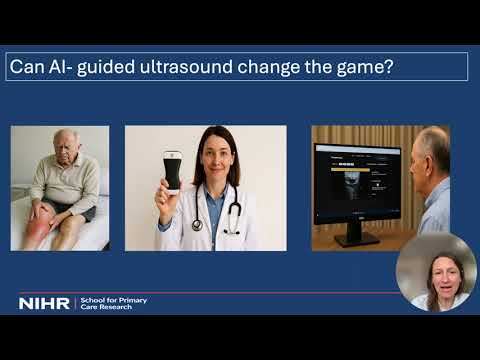
This research investigates whether artificial intelligence can help non-specialist clinicians diagnose deep vein thrombosis using AI-guided handheld ultrasound devices. By enabling faster point-of-care diagnosis in GP surgeries, the project aims to reduce hospital referrals, improve accessibility for vulnerable patients, and help healthcare systems manage increasing clinical demand more efficiently.

This research redefines digital health literacy for an AI-driven world, emphasizing the alignment between users and technology. Using a Delphi method, it identifies three core components—knowledge, skills, and context. The resulting framework guides the design of digital health tools that better support behavior change by adapting to users’ real-world needs.

This research uses wearable data and AI to detect disease earlier by analyzing continuous health signals rather than isolated clinical snapshots. By personalizing models to individual baselines, the system identifies subtle changes linked to conditions like infections, heart issues, and mental health crises, enabling earlier intervention and potentially saving lives.

This research develops explainable AI systems to detect early signals of ideological extremism and potential violence in online communications. By integrating social science and machine learning, the project produces interpretable threat assessments for prevention efforts. The framework also extends to healthcare, including rare disease detection using explainable AI models.