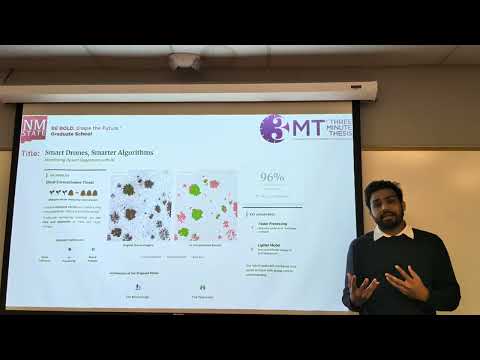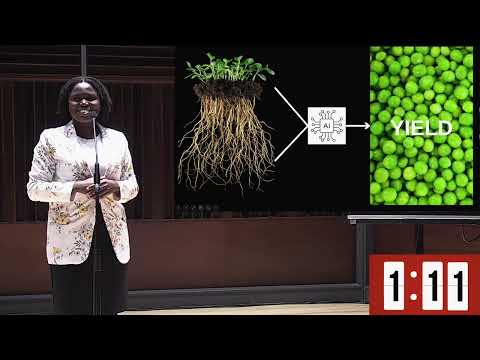
My research uses field images to predict crop yield, leveraging machine learning techniques to extract patterns and features correlating yield.  These features include plant health indicators, growth stages,  or canopy coverage. I am particularly interested in using these features to develop models  that improve the accuracy of yield prediction, helping farmers make  data-driven decisions. My approach considers temporal changes in the crop, capturing how its characteristics evolve. My work contributes to precision agriculture, a field that seeks to optimize resource use, increase productivity, and promote sustainability in farming. My research has the potential to transform traditional agricultural practices by integrating advanced AI methods.

This research investigates the limitations of AI-driven enterprise resource planning systems in multinational corporations. Using mixed methods, it examines ethical risks, data integrity, training gaps, and system migration challenges. The study aims to help organisations implement ERP systems more effectively, reducing financial losses while critically evaluating whether AI delivers its promised efficiency.

This research explores next-generation digital twins—virtual representations of real-world systems that support decision-making through simulation and AI. By combining decentralization, privacy-preserving architectures, explainable AI, and scenario analysis, the work aims to help individuals and organizations evaluate alternative futures, make informed decisions, and build more transparent intelligent systems.

As generative AI reshapes the advertising industry, this research shows creativity is not replaced but redistributed. Through interviews and immersive fieldwork, a four-stage framework—readiness, co-creativity, validation, and execution—reveals how humans and AI can collaborate to amplify creative potential rather than diminish it.

This research examines how AI is used in NHS radiology and challenges claims that it will replace radiologists. Instead of full automation, AI supports clinicians, helping manage workforce shortages while radiologists retain responsibility for diagnosis and treatment decisions. Evidence, not hype, should guide debates about AI and work.

This research develops an onboard AI diagnostic assistant for space missions that can independently investigate life-critical anomalies. By learning how humans ask strategic diagnostic questions, the system combines language models and traditional AI to actively reason through unprecedented spacecraft failures when communication with Earth is delayed.

Antibiotic resistance threatens to return medicine to a pre-antibiotic era. This research uses machine learning to study how bacteria balance resistance to antibiotics and bacteriophages. By revealing genetic trade-offs between attack and defense, the work enables smarter combination therapies that exploit bacterial weaknesses and prevent otherwise deadly infections.

Mel-AI is an artificial intelligence system designed to assist pathologists in distinguishing melanoma from benign moles. By training computer-vision models on 520 cases, the system reached 96% accuracy and interpretable outputs. It offers scalable, objective quality assurance, reducing misdiagnosis risk and improving melanoma detection in high-incidence countries like Australia.