
This research quantifies plastic use in U.S. agriculture, revealing 1.6 million metric tons used annually across crops and products. By identifying major sources and challenges to recycling, the work aims to guide sustainable alternatives, reuse, and recycling strategies that balance environmental, economic, and social needs in farming.
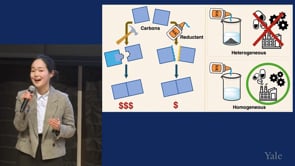
This research develops stable, low-cost homogeneous reductants that act like “super glue” for chemical bond formation. By replacing unpredictable metal powders, it enables more efficient, scalable, and affordable chemical synthesis, with major implications for pharmaceuticals, advanced materials, and sustainable industrial chemistry.
This research examines how land is valued beyond economics, drawing on Irish culture, Indigenous knowledge, and Brehon law. Through interviews across sectors, it shows how accounting choices shape human–nature relationships and argues that restoring communal, sacred views of land may be essential for environmental sustainability.
This research examines how non-profit arts organisations balance ethics and economics under financial pressure. Using data-driven decision-making and “concerned markets,” it shows how these organisations protect mission, affordability, and community care while sustaining operations, demonstrating that cultural institutions quietly support resilience, inclusion, and long-term social value.

This research develops a membrane-based wastewater treatment system that selectively supports nitrogen-removing bacteria without energy-intensive aeration or added organic matter. By enabling efficient biological nitrogen removal, the approach reduces greenhouse gas emissions, lowers costs, and makes advanced wastewater treatment more accessible—protecting aquatic ecosystems and water quality.

Urban farms in Baltimore need reliable irrigation water. This research tested harvested rainwater for E. coli, Listeria, and Salmonella, and evaluated two treatments: sand–iron filtration and peracetic acid sanitizing. Both reduced E. coli, and sanitizing eliminated Listeria. Produce remained contamination-free, suggesting treated rainwater is a viable supplemental irrigation source.
The speaker introduces EcoLiving Lab, an immersive environment that integrates wellbeing and sustainability. By experimenting with small daily changes—sleep habits, food practices, and cleaning routines—participants learn how sustainable behaviours can enhance comfort and restoration. The goal is to make sustainability effortless, personalised, and appealing rather than burdensome.
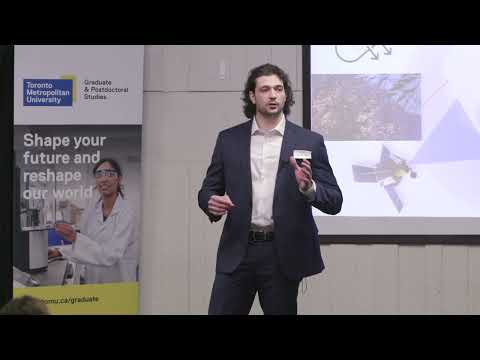
The speaker explains how hyperspectral satellites can detect invisible methane emissions, a major driver of climate change. Their research integrates data from multiple satellites to create a continuous global monitoring system capable of identifying leaks in real time, enabling rapid mitigation and transforming satellite technology into a tool for planetary sustainability.
PFAS “forever chemicals” contaminate water, food, and air and accumulate in the body, causing serious health risks. This research develops a light-activated porous material that traps and breaks down PFAS molecules. Tested in real-world water and now being scaled up, the method aims to provide a practical, permanent solution for removing PFAS and protecting safe drinking water.

The Mississippi River relies on dams for commercial navigation, but these structures block fish migration and damage ecosystems and local fishing economies. This research uses hydrodynamic modelling to test fish-passage designs, such as bypass channels, showing how they can reconnect habitats, support biodiversity, and allow economic and ecological goals to coexist.