This research investigates how the structure of comb polymers influences their ability to stabilize materials in applications ranging from fragrances and food products to wastewater treatment and drug delivery. By systematically modifying polymer architecture, the study identifies design rules that enable more effective, affordable, and targeted performance across diverse industrial and medical uses.
This research develops nanoscale robots made from synthetic DNA capable of navigating and manipulating molecular environments. Using programmable DNA interactions and thermodynamic processes, the work focuses on maze-solving behaviors as a foundation for future applications including allergen removal, nanomaterial assembly, tissue engineering, and programmable molecular systems operating in the physical world.
This research develops a new method for high-resolution 3D printing of metals such as copper. Instead of laser melting, ultraviolet light forms hydrogel structures that are chemically transformed into metal. The technique enables finer features, reduced waste, and fabrication of advanced materials for applications including batteries, structural engineering, and manufacturing.
This research develops water-free electrolyte systems for electrochemical reactions and energy technologies. By replacing water with more stable solvents, the work enables improved batteries, renewable energy storage, and more efficient chemical manufacturing. Applications include long-range electric vehicles, planetary exploration systems, and lower-cost pharmaceutical production using recyclable chemical reagents.
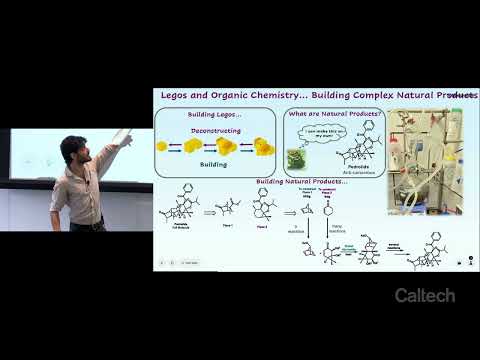
This research focuses on the total synthesis of natural products, biologically important molecules produced by nature. Using pedrolide, an anticancer compound, as a case study, the work applies strategic molecular “deconstruction” to identify simple building blocks and develop laboratory methods for assembling complex natural molecules through innovative organic chemistry.
This research explores converting CO₂ into fuel by designing surfaces that promote carbon–carbon bonding. Using porous materials to concentrate CO₂, it increases reaction efficiency and enables formation of longer hydrocarbon chains. This approach could transform atmospheric carbon into usable fuels, offering a sustainable pathway for future energy production.
Pagination
- Page 1
- Next page