This research develops self-sterilising polymer coatings that become highly acidic when exposed to moisture, rapidly destroying harmful bacteria such as MRSA and E. coli. Designed for hospitals, classrooms, and other high-contact surfaces, these materials could reduce infections without harsh chemicals, helping prevent the spread of antibiotic-resistant bacteria.

This research develops intelligent polymer membranes that selectively capture carbon dioxide using molecular simulations to design highly efficient gas-separation materials. By improving carbon capture at industrial sources, the technology could reduce greenhouse gas emissions, support cleaner energy systems, and contribute to tackling one of the world's greatest challenges: climate change.

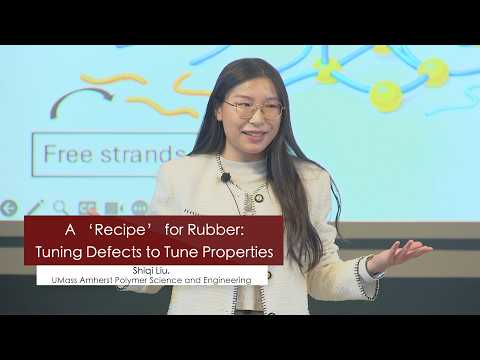
This research investigates how microscopic structural defects affect the performance of rubber materials. By creating nearly defect-free polymer networks and introducing controlled flaws individually, the work isolates how each defect changes material behavior. The findings could improve the design of stronger, safer, and more reliable rubber products used across industry and medicine.


This research addresses the trade-off between sustainability and performance in plastics. By developing a “molecular spring” derived from biomass, the work strengthens biodegradable materials like PLA and enables multifunctional bioplastics. The goal is to create durable, convenient, and sustainable alternatives that support a circular economy without sacrificing everyday usability.

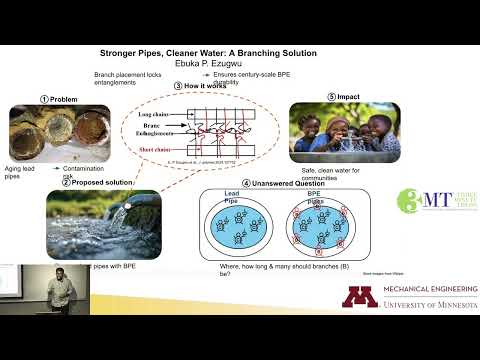
Over 11 million U.S. homes rely on toxic lead pipes. Bioderived polyethylene offers a safer replacement, but long-term durability must be ensured. This research studies how chlorine degrades pipe materials and how molecular branching improves resilience. Accelerated aging tests link polymer structure to performance, guiding design of longer-lasting, reliable water infrastructure.


Millions of U.S. homes still rely on lead pipes, prompting a shift toward bimodal polyethylene replacements. This research examines how molecular branching affects pipe durability under chlorinated conditions. Using accelerated aging tests, it links polymer structure to long-term performance, guiding the design of safer, longer-lasting water pipes for future infrastructure.