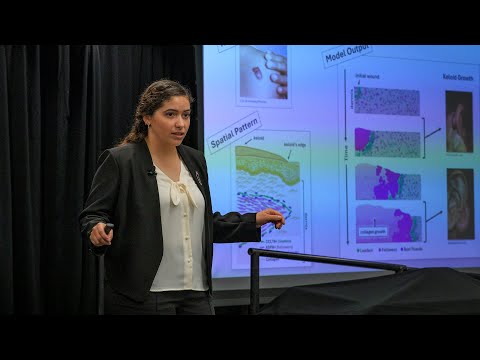
This research uses agent-based mathematical modelling to study keloid scar growth. By simulating interactions among collagen, immune cells, and key scar-associated cell types, the model predicts how keloids expand without requiring harmful patient experiments. The approach may guide future treatments for keloids and broader skin-healing conditions.

This research develops orally administered nanoparticles that target the lymphatic system to treat lupus and osteoporosis simultaneously. By delivering drugs directly to affected tissues while avoiding the bloodstream, the approach reduces toxicity, suppresses inflammatory and bone-damaging genes, and offers a more effective strategy for treating these complex chronic diseases.
This research develops orally administered nanoparticle therapies for metronomic chemotherapy in ovarian cancer. By delivering smaller drug doses directly to tumours over extended periods, it aims to reduce side effects, overcome drug resistance, improve patient quality of life, and make long-term cancer treatment easier and more effective.
This research investigates whether the diabetes drug dapagliflozin (DAPA) can be repurposed to treat metabolic dysfunction-associated steatotic liver disease (MASLD). Using laboratory models, it examines fat accumulation and NHE1 ion channel function, aiming to develop a cost-effective treatment for two closely linked metabolic diseases with one existing medicine.
This research uses artificial intelligence to analyse immune-system data and predict vaccine effectiveness. By identifying early biological signals associated with strong, long-lasting immunity, the work aims to improve vaccine design, personalise vaccination strategies, and support development of universal vaccines capable of protecting against rapidly evolving infectious diseases.
This thesis examines cytokine release storm, where the immune system becomes dangerously overactive. Using rat models, mathematical modelling, science and coding, she maps how corticosteroids move through organs and control inflammation. The goal is to optimise treatment for CRS during cancer therapy, COVID or future pandemics.
This research investigates salivary gland damage caused by radiation therapy, disease and ageing. Focusing on cellular regulation, she identifies XBP1 as a key “manager” maintaining gland structure, cell survival and saliva production. Understanding this mechanism could guide future therapies for patients living with painful, incurable salivary gland dysfunction.
This research investigates whether weight loss from the GLP-1 drug semaglutide includes loss of muscle mass. Using an obesity mouse model and direct muscle measurements, the study found significant muscle loss in females but not males. The findings highlight important sex differences and the need to evaluate body composition, not just weight loss.
This research uses a high-throughput screening platform called EpiScan to identify HIV peptides that bind strongly to MHC molecules and appear on infected cell surfaces. By discovering these immune-visible targets, the work aims to improve detection and elimination of hidden HIV reservoirs, supporting the development of future HIV therapies.
This research investigates how glutamine-rich regions within the LAG-3 protein influence Notch signaling, a critical pathway for cell communication and development. Using CRISPR gene editing, the study found that removing glutamine repeats alters stem cell behavior and cell-cycle progression, providing insights relevant to cancer, Alzheimer’s disease, and future therapies.
Pagination
- Previous page
- Page 2
- Next page