
This research uses artificial intelligence and astronomical data to search for signs of extraterrestrial intelligence. By applying anomaly-detection techniques to telescope images, the project identifies unusual signals or patterns that may indicate intelligent activity, with the ultimate goal of detecting and decoding potential messages from civilizations beyond Earth.

This research develops advanced telescope technologies for directly imaging exoplanets located near bright stars. Using deformable mirrors and specialized optical screens to suppress starlight, the work aims to capture full-colour images of potentially habitable “Goldilocks” planets, helping scientists study planetary atmospheres, temperatures, and the possibility of extraterrestrial life.
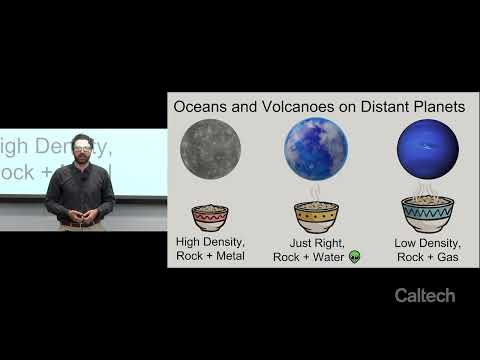
This research identifies potentially habitable rocky exoplanets by measuring their densities, water content, and internal heating through orbital interactions and transit observations. Using these techniques, several promising ocean and volcanic worlds have been identified as targets for the James Webb Space Telescope in the search for extraterrestrial life and habitable environments.
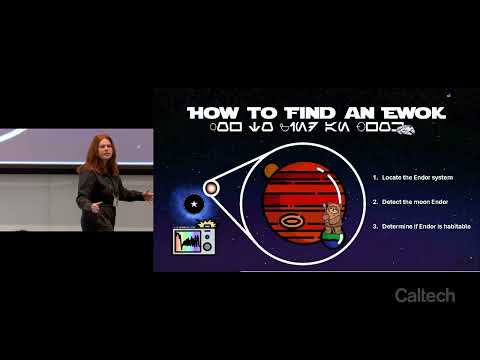
This research develops methods to detect and study exomoons, moons orbiting planets outside our solar system. By combining high-contrast imaging with indirect detection techniques, the work aims to identify exomoons, analyze their atmospheres, and search for biosignatures such as oxygen and methane that could indicate extraterrestrial life.
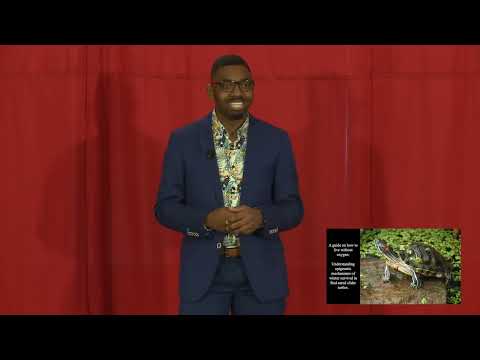
This research investigates how painted turtles survive months without oxygen through epigenetic regulation. By identifying gene-switching mechanisms, it aims to uncover biological strategies for extreme hypoxia tolerance. These insights could inform medical, environmental, and space applications, potentially extending human survival in low-oxygen conditions and advancing fields like transplantation and exploration.
Directly imaging Earth-like exoplanets is one of astronomy’s greatest challenges. Using GLINT, an interferometric instrument on the Subaru Telescope, this research cancels overwhelming starlight to reveal faint nearby planets—paving the way toward discovering another “pale blue dot” and possibly a second Earth.
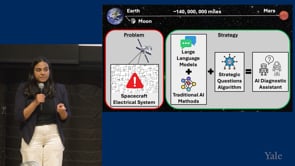
This research develops an onboard AI diagnostic assistant for space missions that can independently investigate life-critical anomalies. By learning how humans ask strategic diagnostic questions, the system combines language models and traditional AI to actively reason through unprecedented spacecraft failures when communication with Earth is delayed.
This research explores swarms of small, modular robots that cooperate like ant colonies to perform complex tasks. Using control theory, optimization, and machine learning, the work enables resilient, energy-efficient robotic systems that adapt in real time, with applications ranging from disaster response and space exploration to medical technologies.
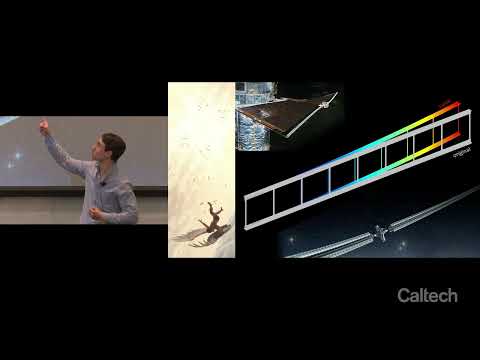
This research investigates how sunlight thermally deforms large flexible spacecraft structures such as solar panels and antennas. Combining computational modeling with laboratory experiments, the work develops methods to predict and reduce solar-induced bending and instability, enabling future spacecraft to deploy larger, lighter, and more reliable structures for deep-space exploration.
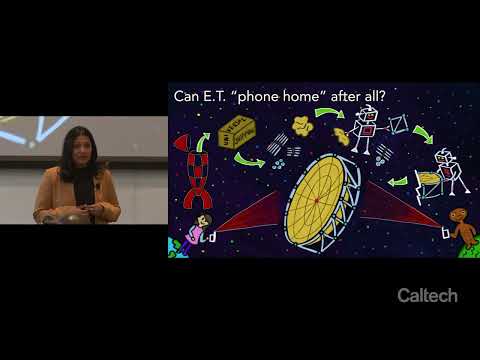
This project develops a 200-metre space reflector antenna using a modular “LEGO-like” assembly system. Designed for compact launch and robotic construction, it enables stronger, higher-quality interstellar communication. The work also models structural behaviour during assembly and could support building other large space structures, advancing deep-space exploration.