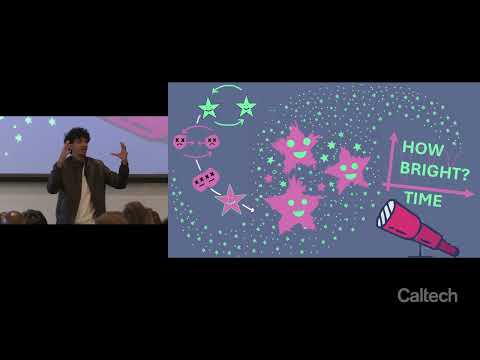
This research investigates “zombie stars” — reanimated white dwarf systems formed through stellar interactions in binary star systems. By analyzing large-scale brightness variations across the Milky Way, the work identified hundreds of these rare objects, providing new insights into stellar evolution, galactic history, and the future lifecycle of stars in our universe.

This research aims to make space travel cheaper by creating reusable rocket engines. Current engines overheat to destructive levels, but simulations show that adjusting the fuel–oxygen ratio can cool them without losing power. By preventing long-term damage, engines can be reused, lowering launch costs and expanding access to space exploration.

The researcher studies how clouds on distant exoplanets affect their climates and potential for life. Working with NASA, they model how exotic materials—like iron or sapphire clouds—absorb and reflect light. They found particle shape greatly influences temperature and habitability, helping determine whether alien worlds could support liquid water and life.