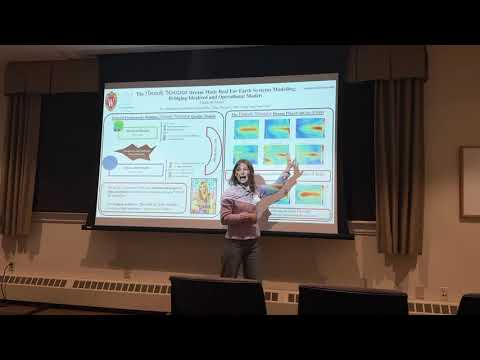
This research develops a high-resolution chemical method for analyzing tree rings to reconstruct past climates and ecosystem responses. By measuring atomic-scale chemical variations within cellulose molecules, the study separates environmental signals from biological responses, enabling more detailed understanding of historical climate change, plant physiology, and long-term ecosystem adaptation.

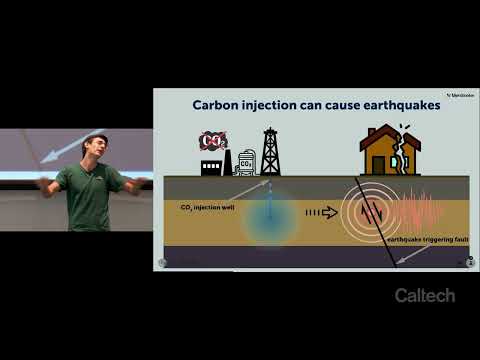
This research investigates earthquake risks associated with underground carbon dioxide storage. By studying seismic activity at the Decatur CO2 storage project, the work improves predictive geological models that account for hidden subsurface structures. The findings aim to make large-scale carbon storage safer, protecting both the climate and nearby communities.

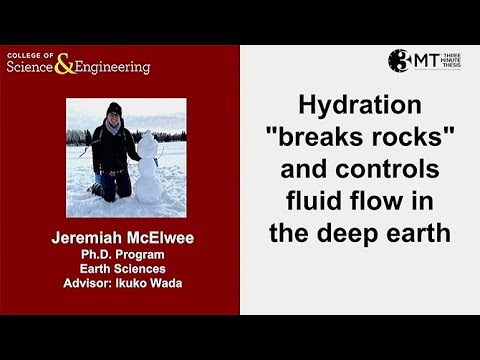
Subduction zones generate earthquakes, tsunamis, and volcanoes, yet their behavior varies between regions. This research investigates how water released from subducting plates interacts with surrounding rocks. Using supercomputer simulations, it models hydration-driven cracking and fluid migration, revealing patterns that may influence where earthquakes and volcanic activity occur.

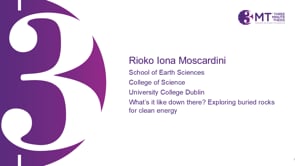
Using cake as an analogy, this research explains how buried sandstones can store naturally heated water for geothermal energy. By studying rock outcrops, cores, and microscopic structures, the work assesses sandstone quality to unlock reliable, renewable heat for buildings—available year-round as a low-carbon energy source.

This research develops stable-isotope tools to measure how microbes—the Earth’s “lungs”—breathe CO₂ in and out. Microbes are massively abundant and shape global climate. Findings show deep subsurface environments slowly emit CO₂, a process that may influence future climate dynamics as human-driven environmental changes accelerate.