This research develops a fast algorithm to identify rare gravitational lenses in images from the Euclid Space Telescope. By analysing how galaxies bend light, it maps the distribution of invisible dark matter, helping astronomers investigate one of the greatest mysteries in physics: the nature and composition of dark matter.

This research studies neutrinos—elusive particles that rarely interact with matter—and their ability to change type, known as neutrino oscillation. Using detectors in Japan, the experiment compares neutrinos before and after travel. Improved near-detector accuracy enables precise measurements, helping explain fundamental questions about matter, antimatter, and the structure of the universe.

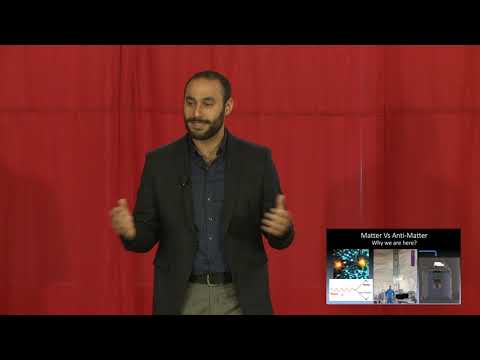
This research investigates why matter dominates over antimatter in the universe. By isolating xenon isotopes deep underground, scientists aim to detect rare nuclear reactions that could explain this imbalance. The work involves large-scale gas processing and long-term observation, potentially revealing fundamental insights into the origin of matter and existence.

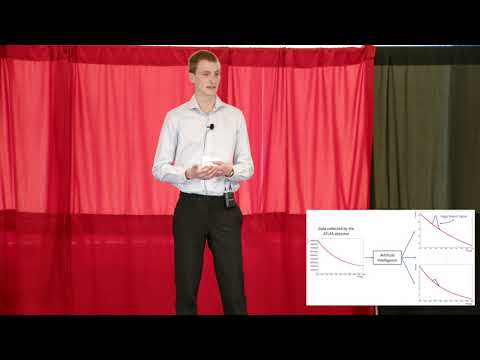
This research uses AI to detect subtle interactions between the Higgs boson and muons at the Large Hadron Collider. By refining large datasets, it aims to uncover how particles acquire mass at smaller scales. Confirming this interaction would deepen understanding of the Higgs field and fundamental physics.