This research investigates gluon saturation, an extreme state of matter that existed immediately after the Big Bang. By developing precise theoretical calculations for particle collision experiments, it helps scientists understand how gluons bind quarks to form matter, revealing the fundamental processes that shaped the early universe and made life possible.
This research studies neutrinos—elusive particles that rarely interact with matter—and their ability to change type, known as neutrino oscillation. Using detectors in Japan, the experiment compares neutrinos before and after travel. Improved near-detector accuracy enables precise measurements, helping explain fundamental questions about matter, antimatter, and the structure of the universe.
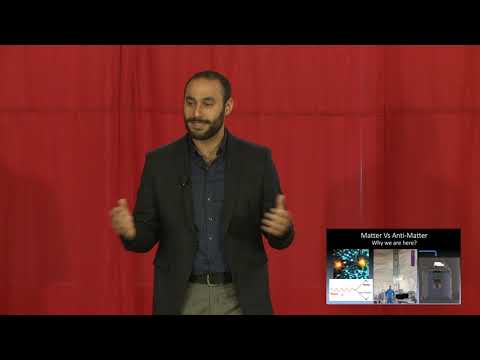
This research investigates why matter dominates over antimatter in the universe. By isolating xenon isotopes deep underground, scientists aim to detect rare nuclear reactions that could explain this imbalance. The work involves large-scale gas processing and long-term observation, potentially revealing fundamental insights into the origin of matter and existence.