This research investigates gluon saturation, an extreme state of matter that existed immediately after the Big Bang. By developing precise theoretical calculations for particle collision experiments, it helps scientists understand how gluons bind quarks to form matter, revealing the fundamental processes that shaped the early universe and made life possible.
2025
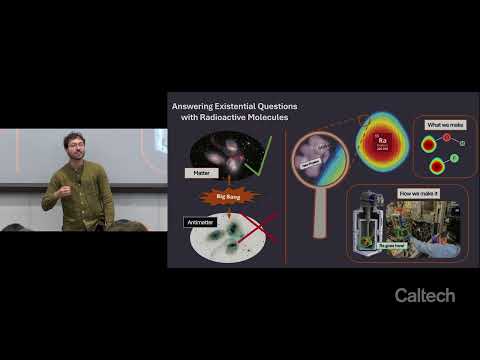
This research develops tabletop methods for studying rare radium-containing molecules to search for broken symmetries between matter and antimatter. Because radium’s asymmetric nuclear structure strongly amplifies subtle physical effects, these molecules provide highly sensitive probes for new physics that could help explain why matter exists in the universe after the Big Bang.
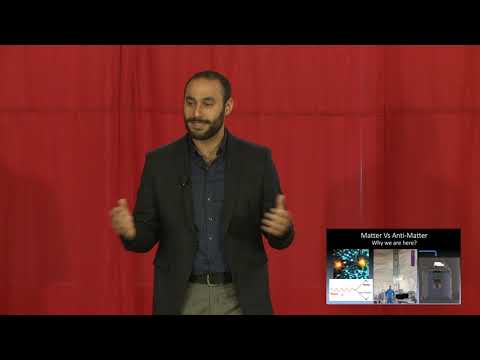
This research investigates why matter dominates over antimatter in the universe. By isolating xenon isotopes deep underground, scientists aim to detect rare nuclear reactions that could explain this imbalance. The work involves large-scale gas processing and long-term observation, potentially revealing fundamental insights into the origin of matter and existence.