
This project uses hive sound recordings and machine learning to detect early signs of bee swarming. By identifying acoustic differences between swarming and stable colonies, the system predicts swarming with 93% accuracy. This enables beekeepers to intervene early, prevent colony loss, and even create new healthy colonies.

This study modeled wild edible mushroom yields in Mediterranean forests using Planet satellite imagery, LiDAR, climate data, and field measurements. Results show that seasonal NDVI differences, precipitation, and forest structure are key predictors. Integrating high-resolution intra-annual remote sensing significantly improves yield prediction and ecological understanding.

This study evaluated a PointNet++ deep learning model for binary classification of Pinus sylvestris and Quercus pyrenaica using only LiDAR 3D point clouds. A balanced dataset of 160 trees achieved 91% accuracy, showing that geometric features alone can effectively discriminate species, highlighting the potential of lightweight AI models for forest inventories.

This study mapped land use changes in the Grombalia Region of Tunisia using Sentinel-2 imagery and machine learning. Three classifiers—Random Forest, SVM, and CNN—were compared. Random Forest achieved the highest accuracy. Results highlight agricultural changes over time and demonstrate the effectiveness of remote sensing for environmental monitoring.

2026
This study developed a real-time IoT-based system to optimize fishway performance in fragmented rivers. Using sensors, PIT-tag tracking, and machine-learning models, it links climate triggers with hydraulic controls. Adaptive sluice-gate regulation improved fish passage efficiency by 166% without reducing hydropower output, offering scalable, sustainable river management.
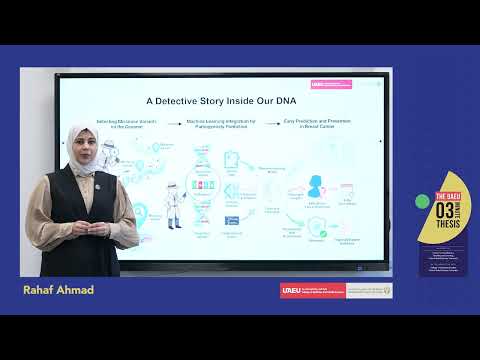
This research applies machine learning to genetic data to distinguish harmless DNA variations from cancer-causing mutations. By treating DNA like a crime scene, the model learns to identify which genetic changes truly drive breast cancer risk, supporting more accurate diagnosis and informed clinical decision-making.

2025
Using machine learning and Hidden Markov Models, this research analyzes the authorship of disputed New Testament letters. The results show that stylistic differences reflect the Apostle Paul’s versatile writing styles rather than forgery, demonstrating how modern computational tools can help recover long-standing historical truths.

This research exposes a hidden privacy risk in online voting and video conferencing: eye movements captured by standard webcams can reveal user choices. Using AI models, voting decisions were inferred with over 95% accuracy, highlighting that digital security must address behavioral signals—not just encryption.
2025
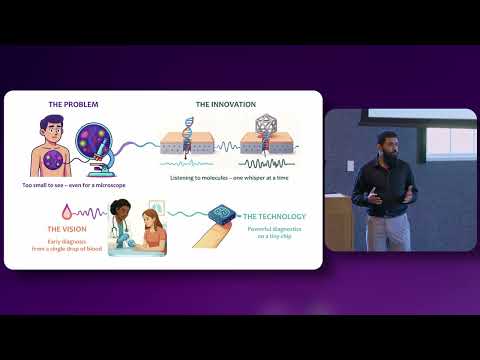
This research develops DNA-origami-enhanced nanopores to detect individual biomolecules from a single drop of blood. By slowing molecules and reading their electrical signatures with machine learning, the technology enables rapid, ultra-early disease diagnosis without traditional laboratory testing.

Inspired by biological reproduction, this research uses evolutionary algorithms to evolve mathematical equations that describe physical systems. Unlike black-box AI, these models are transparent and adaptable. By combining evolution with graph neural networks, the approach improves simulations for applications such as traffic control, robotics, and engineering design.