
This research challenges the long-standing assumption that brain regions causing no errors during awake brain surgery are functionally unimportant. By measuring subtle delays in speech rather than errors alone, it introduces causal parametric mapping, offering surgeons a more sensitive way to preserve language function and improve patient outcomes.
2025
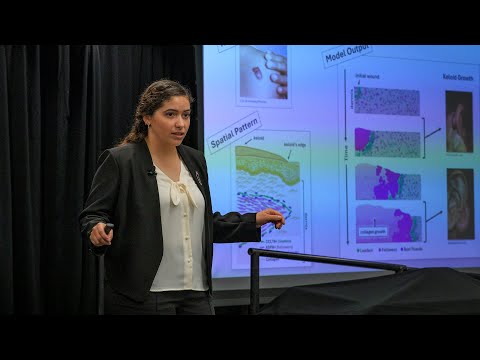
This research uses agent-based mathematical modelling to study keloid scar growth. By simulating interactions among collagen, immune cells, and key scar-associated cell types, the model predicts how keloids expand without requiring harmful patient experiments. The approach may guide future treatments for keloids and broader skin-healing conditions.

This research develops orally administered nanoparticle therapies for metronomic chemotherapy in ovarian cancer. By delivering smaller drug doses directly to tumours over extended periods, it aims to reduce side effects, overcome drug resistance, improve patient quality of life, and make long-term cancer treatment easier and more effective.

This research investigates whether the diabetes drug dapagliflozin (DAPA) can be repurposed to treat metabolic dysfunction-associated steatotic liver disease (MASLD). Using laboratory models, it examines fat accumulation and NHE1 ion channel function, aiming to develop a cost-effective treatment for two closely linked metabolic diseases with one existing medicine.
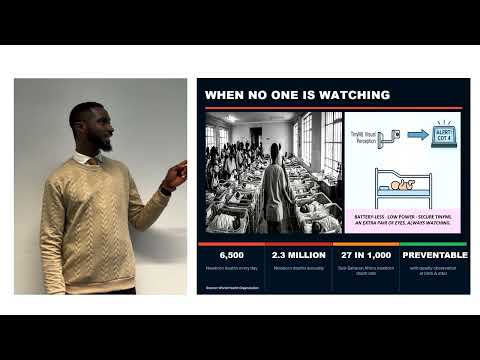
This research develops an ultra-low-power, battery-free newborn monitoring system for under-resourced hospitals. Using on-device artificial intelligence and energy harvesting, it continuously detects signs of distress while protecting patient privacy. The technology aims to support overstretched nurses, enable earlier intervention, and reduce preventable newborn deaths worldwide.

This research develops innovative three-dimensional "daisy" particle structures to improve inhaled medicines. Using Isothermal Dry Particle Coating, it prevents fine drug particles from clumping, ensuring they reach the lungs effectively. The work aims to improve inhaler performance and treatment for the 300 million people worldwide living with respiratory diseases.

2026
This thesis examines who turns to AI for mental health support, rather than whether AI can be a therapist. Drawing on TherapyGPT forum analysis and ongoing experiments, the research identifies fear of judgment, trust in AI and past therapist failures as possible drivers of AI therapy use.

This project developed AI Care, a voice-based caregiving system for people with early-stage Alzheimer's disease. Unlike conventional voice assistants, it uses caregiver-maintained medical records to provide personalised, safety-aware support. By adapting to users rather than requiring users to adapt to technology, AI Care aims to extend safe, independent living at home.

2025
This research examines whether changes in walking patterns can predict frailty before serious health events occur. Using smart insoles, GPS tracking, and machine learning, mobility data from older adults is analyzed to identify early warning signs of decline. The goal is to enable proactive interventions and support healthier aging.
2026
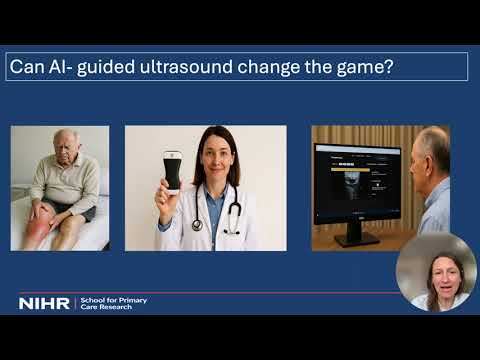
This research investigated whether AI-guided handheld ultrasound can help diagnose deep vein thrombosis (DVT) in primary care. Through a systematic review, a clinical study involving 565 patients, and stakeholder interviews, the research found promising results but highlighted challenges involving image quality, accountability, and integration into NHS healthcare systems.