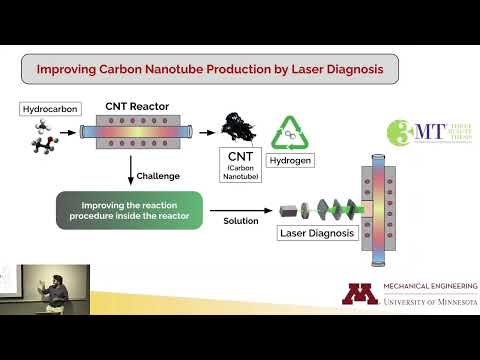
Hydrocarbons drive modern society but fuel climate change when burned. This research converts hydrocarbons into carbon nanotubes and clean hydrogen instead. Using laser diagnostics to probe reactors, it reveals how nanotubes form, enabling higher production rates, industrial decarbonization, and advanced materials for a sustainable, low-carbon energy future.
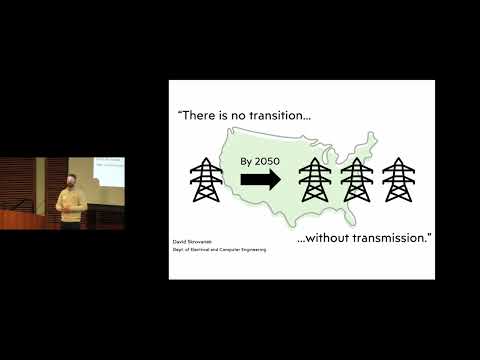
Achieving a carbon-free future requires not only renewable energy generation but also major upgrades to electricity transmission. This research develops electrostatic generators that produce high-voltage DC power more efficiently and sustainably than current technologies. By reducing costs and reliance on rare materials, the work supports grid expansion and large-scale decarbonisation.

This research develops sustainable screen materials using nanoscale “sponges” that trap light-emitting molecules. By converting these materials into ultra-thin nanosheets, the study offers brighter, longer-lasting, and energy-efficient alternatives to toxic, non-renewable screen components, reducing environmental impact while supporting future global screen demand.

2024
This study tested sustainable alternatives to sand for Texas rain-garden soils, using waste materials like crushed glass, oyster shell, and expanded shale mixed with clay. All alternatives performed as well as sand in draining stormwater. These findings support affordable, scalable, and environmentally friendly strategies to reduce urban flooding amid rising climate-driven flood risks.

This research improves the lifespan of sodium-metal batteries, a cheaper and greener alternative to lithium-ion cells for renewable energy storage. By replacing copper with zinc as the supporting material, sodium forms smooth, stable deposits, extending battery life 15-fold. This innovation could deliver affordable, sustainable grid-scale energy storage.