Image
Swansea article

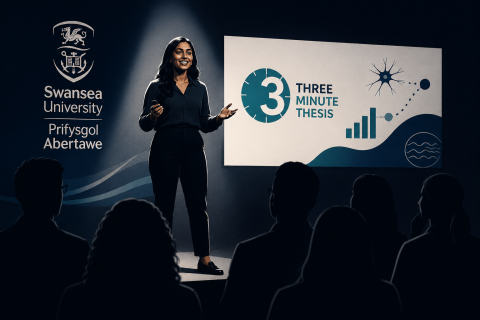
One of the reasons for this platform is to not only provide an authentic voice on new cutting-edge research, but also showcase presentation skills which will become a premium in the changing graduate world. But orally presenting your research to an audience is also a valuable learning experience. A new case study from Swansea University suggests that 3MT is more than a public speaking exercise. It can produce measurable changes in how postgraduate researchers understand, present and value their own work.

Writing for the Researcher Education and Development Scholarship Conference, (which is edited by Dr Kay Guccione Dr Teresa Phipps and Dr Emily Lowthian describe their findings from Swansea University’s 2024 3MT programme. Their central question was simple but important: does taking part in 3MT actually improve doctoral researchers’ confidence and communication skills, or does it merely appear to do so?

To answer this, they followed 19 doctoral researchers through the competition process, collecting survey data at three stages: the initial information and training session, after the qualifying round, and after the university-wide final. Their approach combined quantitative survey questions with open-ended reflections, allowing them to measure change while also capturing the more personal experience of standing up and speaking about a complex thesis in public.

The findings are striking. By the end of the 3MT process, 80% of participants described themselves as confident presenting their research. There was also a 60 percentage-point increase in participants’ intention to seek out further opportunities to present their work. Students reported improvements in their ability to adapt their communication for different audiences, identify what an audience needs, explain the significance of their research, and communicate the broader value of their thesis.

This matters because 3MT does not simply ask doctoral researchers to speak more quickly. It asks them to think differently. A thesis is usually written for specialists, examined by experts, and developed within a highly technical scholarly context. 3MT requires the researcher to step outside that frame and ask: What is the core idea? Why does it matter? Who needs to understand it? What would make someone outside my field care?

That process appears to help researchers see the “big picture” of their own work. Several participants reflected that the competition helped them summarise their thesis, relate it to different audiences, and step outside their comfort zone. For some, especially those for whom English was a second language or who had limited previous presenting experience, the process was challenging but valuable.

One of the most interesting findings is that increased confidence did not mean the disappearance of nerves. Participants still described anxiety, concern about getting the presentation right, and uncertainty about whether they had pitched their talk at the correct level. But this is precisely what makes the study useful. Confidence in communication is not the same as effortless performance. It is often built through the experience of doing something difficult, receiving feedback, and discovering that anxiety and achievement can coexist.

The study also found a more modest increase in enjoyment of presenting research. This may reflect the fact that those who choose to enter 3MT may already be relatively open to research dissemination. But it also points to a more realistic understanding of researcher development. Not everyone needs to become a natural performer. The aim is not to turn every doctoral researcher into a polished public speaker, but to help them become clearer, more adaptable and more confident communicators.

For universities, the Swansea case study offers an important lesson. 3MT works best when treated not simply as a competition, but as a structured development programme. At Swansea, participants received training, analysed previous presentations, took part in qualifying rounds, and received one-to-one feedback. Following the study, the university has further strengthened support around script development, audience awareness and public speaking coaching.

This is where graduate presenations have wider significance for postgraduate education. Doctoral researchers are increasingly expected to explain their work beyond the academy: to funders, employers, policymakers, industry partners, schools, charities, media organisations and the wider public. Yet conventional doctoral training still places most emphasis on written outputs: the thesis, journal articles, grant applications and conference abstracts. These remain essential, but they do not cover the full range of communication skills researchers need.

A three-minute talk is not a simplified thesis. Done well, it is a disciplined act of translation. It demands clarity without distortion, accessibility without trivialisation, and confidence without jargon. The Swansea study provides useful evidence that this kind of training can change not only how doctoral researchers present, but how they think about the value and audience for their work.

For my-thesis.org, these findings reinforce why short research talks deserve to be preserved, indexed and made discoverable. A 3MT presentation is often the most accessible public expression of a doctoral project. It captures the researcher’s voice, the central question, the significance of the work and the human story behind the research. Yet too many of these talks disappear into institutional webpages, YouTube channels or one-off competition archives where they are difficult to find after the event.

If 3MT helps researchers become more confident communicators, then platforms like my-thesis.org can help ensure that their communication has a life beyond the competition. Making talks searchable by topic, institution, speaker and keyword means that the value created through 3MT training is not lost. It allows future students, supervisors, employers, collaborators and members of the public to discover research through the people who are doing it.

The Swansea study shows that 3MT can have a tangible impact on postgraduate confidence, self-efficacy and communication behaviour. But it also shows something deeper: doctoral researchers benefit when they are asked to explain why their work matters, not only to examiners, but to the wider world.

Three minutes may be brief. The impact can last much longer.

Image
THE

Artificial intelligence is changing higher education at a remarkable pace.

In a recent opinion piece for Times Higher Education, Bruce Hood argued that as AI becomes increasingly capable of producing polished written work, universities must rethink how they develop and assess one of the most important graduate attributes: the ability to communicate knowledge effectively to other human beings.

For decades, universities have focused primarily on written communication. Essays, reports, dissertations and examinations have been the traditional ways students demonstrate understanding. But the emergence of generative AI raises an uncomfortable question: if a machine can help produce convincing written work, how can employers, educators and society distinguish between possessing knowledge and simply presenting it?

The answer may lie in a skill that has often been overlooked within higher education: spoken communication.

Communication Beyond Writing

The ability to explain complex ideas clearly has always mattered. Whether presenting research, pitching a business proposal, explaining technical concepts to clients, or leading a team, professional success often depends on communicating knowledge effectively.

Employers recognise this. Across multiple surveys, verbal communication consistently ranks among the most sought-after graduate attributes. Yet many students complete their degrees having received relatively little formal training in public speaking, audience engagement or persuasive communication.

This is particularly surprising given that communication is not simply the transmission of information. Effective speakers must think on their feet, respond to questions, establish credibility, build trust and adapt to their audience in real time. These are deeply human skills that AI cannot easily replicate.

Knowledge Is Not Enough

Good communication begins with understanding.

One concern is that AI may allow students to engage less deeply with the material they are studying. If students rely on AI to generate essays and reports, they may miss the intellectual struggle that often produces genuine comprehension.

But even deep knowledge is not sufficient on its own.

Many graduates possess considerable expertise but struggle to explain it to non-specialists. Anyone who has attended an academic conference knows that expertise and communication ability do not always go hand in hand.

Communication is a skill that requires practice, feedback and repetition. Like any complex ability, it improves through deliberate effort.

Why Three Minute Thesis Matters

This is one reason the Three Minute Thesis (3MT®) competition has become such a global success.

Developed by the University of Queensland and now adopted by more than a thousand institutions worldwide, 3MT challenges doctoral researchers to explain years of work in just three minutes using language that a general audience can understand.

The challenge is deceptively difficult.

Researchers must identify the core message of their work, strip away unnecessary jargon, construct a compelling narrative and connect with an audience that may know nothing about their field.

In doing so, they develop precisely the communication skills that employers, policymakers, journalists and the public increasingly value.

The Problem of Visibility

Yet there is another challenge.

Every year, thousands of students participate in competitions, public engagement events, conference presentations and research showcases. These experiences develop valuable communication skills, but the evidence often disappears once the event concludes.

A presentation may be uploaded to YouTube, buried within a university playlist, and never seen again.

The achievement itself becomes difficult to discover, verify or showcase.

Why My-Thesis?

My-Thesis was created to address this problem.

The platform provides a searchable index of research presentations, enabling graduate researchers to make their talks more discoverable and giving audiences a way to find research by topic, institution, researcher or keyword.

But the platform is about more than research visibility.

At its core, My-Thesis recognises communication as an academic achievement in its own right.

A successful presentation demonstrates not only what a researcher knows but also their ability to explain, persuade and engage. These are increasingly important skills in a world where information is abundant but understanding remains scarce.

Looking Forward

Artificial intelligence is undoubtedly transforming education. Universities will continue to debate how best to assess knowledge and maintain academic integrity in an age of AI-assisted learning.

However, one consequence seems increasingly clear.

The graduates who thrive will not simply be those who possess knowledge. They will be those who can communicate it effectively, authentically and persuasively.

The ability to stand in front of an audience and explain an idea clearly may become one of the most valuable skills a graduate can possess.

And that is precisely why platforms such as My-Thesis matter more than ever.

Image
Guardian article

This week, the University of Manchester announced plans to guarantee every undergraduate some form of real-world work experience before graduation, signalling something much bigger than a curriculum redesign. It may represent a fundamental shift in what universities believe a degree is actually for.

For generations, elite universities—particularly those within the Russell Group—have defended higher education as intellectual formation rather than vocational training. A degree was meant to cultivate critical thinking, analysis, communication, and intellectual independence.

But the economic reality facing graduates has changed dramatically.

Students now leave university with debts often exceeding £50,000, entering one of the most competitive graduate labour markets in decades. Many graduates struggle to secure professional employment and increasingly find themselves underemployed in roles that historically did not require degrees. Employers, meanwhile, continue to complain about “skills gaps” and lack of workplace readiness.

Against this backdrop, Manchester’s proposal feels less radical and more inevitable.

A Degree Plus Experience

Vice-chancellor Duncan Ivison argued that no student should spend three years engaged solely in academic study. Instead, every student should have the opportunity to contextualise their learning through placements, internships, employer projects, exchanges, or community engagement.

Importantly, this model applies equally to humanities and STEM subjects.

That matters because employers consistently report valuing transferable skills such as communication, creativity, collaboration, adaptability, and critical reasoning—precisely the capabilities many degrees already develop. The problem is often not the absence of these skills, but graduates struggling to demonstrate them convincingly.

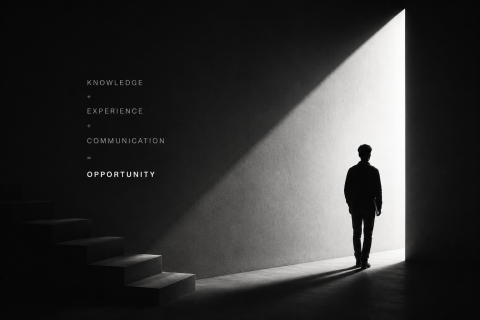
Experience provides evidence.

A history student who has completed a museum placement or policy project suddenly has a narrative connecting academic abilities to practical application. Structured work experience becomes the bridge between intellectual capability and employability.

The Hidden Inequality Problem

Manchester’s proposal also addresses a quieter issue within graduate recruitment: access.

Prestigious internships and professional opportunities are often easier to secure for students with family networks, financial support, or existing social capital. Universities embedding work experience directly into degree structures may therefore help level the playing field.

Manchester explicitly stated that opportunities should not depend on “personal contacts” — a significant acknowledgement of how unequal graduate access can be.

However, scale remains a challenge. As Nick Hillman noted, coordinating meaningful placements for more than 30,000 undergraduates is a major logistical undertaking. Many students are already balancing paid work alongside study because of rising living costs. Adding additional placements without careful integration risks increasing pressure rather than reducing it.

The AI Era and the Value of Human Skills

Manchester’s move also reflects a wider transformation accelerated by artificial intelligence.

As AI automates more routine cognitive tasks — drafting, summarising, coding assistance, data analysis — the labour market increasingly rewards distinctly human capabilities: judgement, communication, creativity, collaboration, and adaptability.

Experiential learning develops precisely these attributes.

Placements force students to navigate ambiguity, institutional cultures, deadlines, teamwork, and practical problem-solving in ways difficult to replicate entirely within lectures or seminars.

This is where platforms such as my-thesis.org become particularly relevant.

One of the growing challenges for graduates is not simply possessing skills, but making those skills visible. Traditional CVs often struggle to communicate qualities such as communication ability, intellectual confidence, public engagement, or interdisciplinary thinking.

Short-format academic presentations — such as Three Minute Thesis competitions — provide direct evidence of those capabilities. They showcase not only subject expertise, but the ability to explain complex ideas clearly, think under pressure, communicate persuasively, and engage wider audiences.

By indexing and making these presentations searchable, my-thesis.org effectively creates a public-facing portfolio of graduate communication and research skills. In an increasingly competitive labour market, this gives students something far more dynamic than a transcript alone: demonstrable evidence of intellectual and professional capability.

In many ways, platforms like my-thesis.org complement the same shift Manchester is recognising — the move away from degrees as static credentials and toward graduates as visible, verifiable demonstrations of applied skill.

Beyond Employability

Reducing universities purely to workforce preparation would still be a mistake. Universities are civic and intellectual institutions, not simply employment factories.

But Manchester’s proposal is significant because it attempts to fuse intellectual development with real-world application rather than treating them as opposites.

The old divide between “academic” and “vocational” education is beginning to collapse. The future university may increasingly be defined not only by lectures and examinations, but by ecosystems connecting scholarship, communication, public engagement, workplace experience, and applied learning.

The question students increasingly ask is no longer simply: “What did I learn?”

It is: “How can I show what I’m capable of doing?”