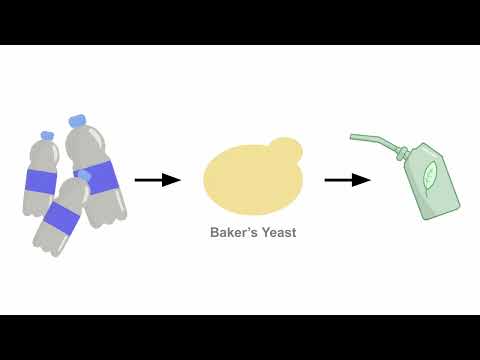
This research engineers yeast to convert PET plastic waste into valuable chemicals like PCA, enabling the production of biofuels, pharmaceuticals, and biodegradable materials. By transforming low-value plastic into high-value products, it offers a scalable biotechnological solution to reduce pollution and support the transition to sustainable, circular economies.

2026
This research addresses rural water scarcity in Colombia by developing a household treatment system combining filtration and solar disinfection. Using engineering models, it optimizes flow, pathogen inactivation, and sunlight exposure to ensure reliability. The approach delivers safe, simple, and sustainable water access, reducing disease and improving quality of life in underserved communities.

This research uses a traffic analogy to explain gas transport challenges in carbon dioxide electrolysis devices. Despite identical porosity, microstructural connectivity determines performance under flooding conditions. Computational modelling reveals how pathway structure affects efficiency, guiding design improvements that enhance CO₂ conversion into fuels and chemicals, supporting scalable and cleaner energy technologies.

This research transforms agricultural waste into biochar-based activated carbon for batteries and supercapacitors. By replacing costly materials, it improves energy storage performance while reducing costs, offering a sustainable and affordable solution that turns waste into valuable resources for future energy technologies.
2025
This research improves biofuel production from sewage sludge by enhancing cellulose degradation. By isolating and reintroducing naturally occurring bacteria and fungi, sludge treatment efficiency and methane yield increase. The approach reduces waste, supports renewable energy generation, and contributes to replacing fossil fuels with sustainable alternatives.
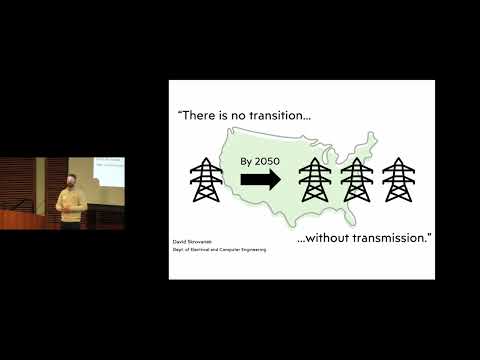
Achieving a carbon-free future requires not only renewable energy generation but also major upgrades to electricity transmission. This research develops electrostatic generators that produce high-voltage DC power more efficiently and sustainably than current technologies. By reducing costs and reliance on rare materials, the work supports grid expansion and large-scale decarbonisation.

This research explores human motion as a renewable energy source using nanogenerators made from nanomaterials. By converting everyday body movement into electricity, the work demonstrates a novel, sustainable approach to reducing reliance on fossil fuels and supporting a cleaner energy future.

Using cake as an analogy, this research explains how buried sandstones can store naturally heated water for geothermal energy. By studying rock outcrops, cores, and microscopic structures, the work assesses sandstone quality to unlock reliable, renewable heat for buildings—available year-round as a low-carbon energy source.

Inspired by childhood experiences on the Navajo Nation, this research examines how Native American tribes use renewable energy to address energy insecurity and achieve energy sovereignty. Through interviews and site visits, it highlights infrastructure challenges, economic burdens, and policy gaps, advocating for inclusive renewable energy policies to support reliable, affordable, and sustainable tribal energy systems.
This research uses data fusion and spatial statistics to combine official and citizen weather data, improving real-time, high-resolution wind forecasts across Ireland. By validating and correcting personal weather stations, the approach reduces uncertainty in renewable energy forecasting and supports efficient grid management toward Ireland’s 2050 net-zero targets.