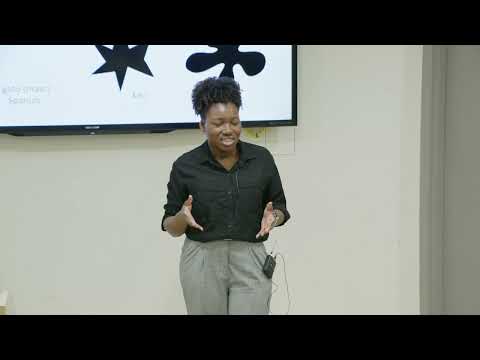
This research investigates sound symbolism: the relationship between particular speech sounds and perceived meanings. By analysing animal names in English, French, and Spanish, it examines whether consonants, vowels, and syllable stress correspond with characteristics such as size and danger, helping explain language evolution and potentially informing language learning and word creation.

2026
This research aims to improve literacy for deaf people by developing a practical writing system for sign languages. Because most sign languages lack a standard written form, deaf learners often struggle with written English. The project creates readable sign-language texts and tests whether they can support literacy in deaf communities worldwide.
This study investigates whether morphological awareness—the ability to understand word structure—can improve literacy in both English and Chinese among bilingual children. Through an eight-week training program, Chinese-English bilingual children learn word-building patterns. The research explores whether morphological awareness can serve as a bridge connecting literacy development across both languages.

2025
This research investigates why children struggle to learn pronouns and why these difficulties vary across languages. Through cross-linguistic experiments and eye-tracking, it shows that pronouns pose an intrinsic processing challenge. Some languages compensate for this difficulty, offering new insights into language development and human learning.