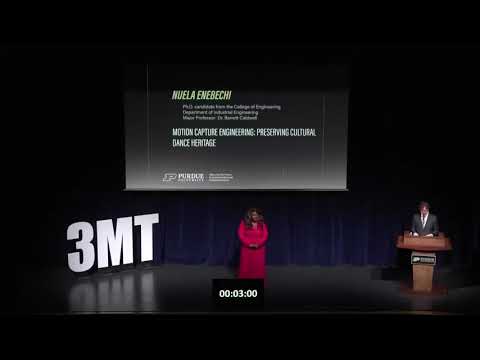
This research uses AI-powered markerless motion capture to preserve Indigenous cultural dances as digital archives. By recording thousands of movement data points, it safeguards intangible cultural heritage for future generations. The work aims to extend this technology globally, ensuring every culture has the tools to preserve its unique traditions.
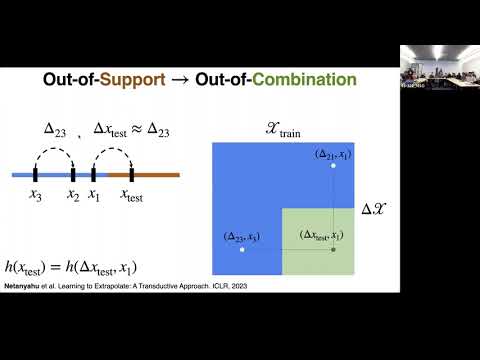
This defense addresses generalization under distribution shift with limited data. It introduces (1) diffusion-based inverse task inference that recovers a task embedding from a few demonstrations, enabling compositional generation without fine-tuning; and (2) bilinear transduction that converts out-of-support inputs into out-of-combination problems, yielding zero-shot extrapolation in robotics and property prediction.
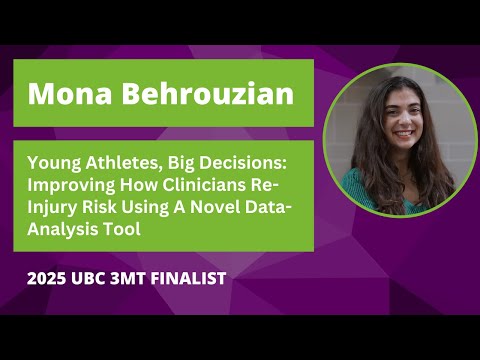
This research develops an objective, data-driven approach to return-to-sport decisions after pediatric knee surgery. Using motion capture and advanced data analysis, it identifies hidden movement patterns linked to re-injury risk. The goal is to improve clinical decision-making, reduce repeat injuries, and make injury prevention more accessible beyond specialist clinics.