Year
2026
Summary

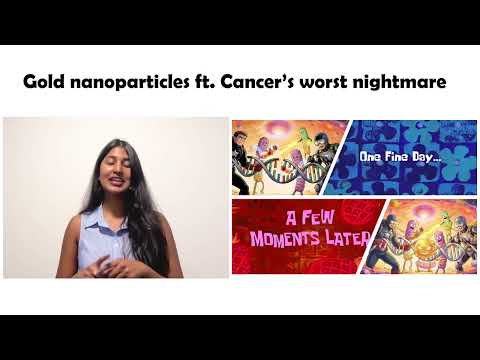
This research develops gold nanoparticles coated with peptides to block DNA repair in colorectal cancer cells, helping overcome drug resistance. Laboratory studies show the treatment dramatically reduces cancer cell survival after radiation while minimising toxicity. The approach could provide a safer, more effective therapy for colorectal cancer and other drug-resistant cancers.

Organisation

Year
2026
Summary

This research develops brain-inspired computer chips using memristors, devices that can store and process information simultaneously like biological synapses. By enabling in-memory computing, the technology reduces energy consumption while supporting applications such as autonomous robots and image processing. The work advances efficient hardware for future artificial intelligence systems.

Organisation
Year
2026
Summary

This research investigates how the shape, size, and surface chemistry of carbon nanomaterials influence their ability to remove contaminants from complex wastewater. By systematically testing nanomaterial variations against pollutants such as microplastics and petroleum derivatives, it aims to establish design rules that enable more effective, real-world water treatment technologies.


Year
2026
Summary

This research develops nanobubble-enhanced ultrasound imaging as an accessible alternative to MRI for cancer diagnosis. Tiny gas-filled nanoparticles amplify ultrasound signals and improve image quality, particularly in prostate cancer. The technology could reduce diagnostic delays, lower costs, and provide high-quality medical imaging to more patients worldwide.

Year
2026
Summary

This research develops antibacterial nanostructured surfaces inspired by natural materials such as cicada wings. The engineered surfaces physically rupture bacteria using nanoscale needle-like structures, avoiding traditional antibiotics and reducing the likelihood of antibiotic resistance. The technology could improve infection control in medical devices, implants, and hospital environments.

Organisation
Year
2025
Summary

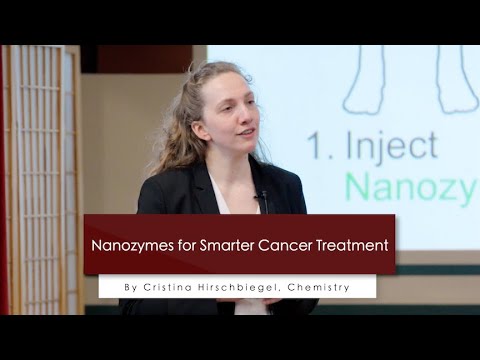
This research develops “nanozymes,” nanoparticle-based catalysts that activate cancer drugs directly at tumor sites. Instead of carrying large amounts of chemotherapy drugs, nanozymes locally trigger inactive drugs into their active form only within cancer tissue. Early mouse studies show effective tumor destruction with significantly reduced side effects compared to conventional chemotherapy.

Year
2026
Summary

This research develops nanoscale “smart package” delivery systems for PROTAC cancer drugs. Antibody nanogel conjugates selectively target cancer cells, enter them, and release therapeutic molecules while minimizing exposure to healthy tissue. The approach improves delivery efficiency and aims to reduce the severe side effects that often limit cancer treatment.

Year
2026
Summary

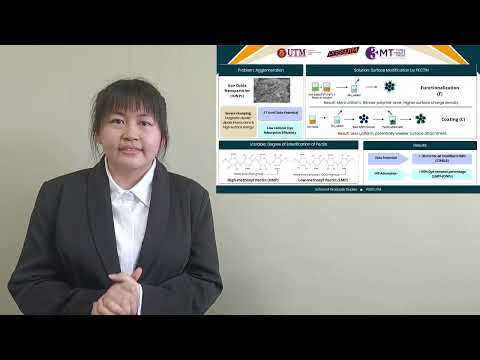
This research improves iron oxide nanoparticles for pollutant removal by addressing aggregation issues. Using pectin surface modification, particularly low methoxyl pectin via functionalization, enhances stability and adsorption efficiency. The modified nanoparticles achieve up to 95% methylene blue removal, demonstrating a significant improvement for environmental remediation applications.

Year
2026
Summary

This research improves fluorescent imaging by enhancing the brightness of long-wavelength dyes. By encapsulating flexible squaraine dyes within macrocyclic rings, molecular motion is restricted, reducing energy loss and increasing light emission. The result is brighter, clearer imaging, enabling better visualization of biological structures such as cells and cancer tissue.