This research combines foam fractionation and ultraviolet treatment to permanently remove PFAS "forever chemicals" from contaminated water. By first concentrating PFAS into foam and then destroying their strong carbon–fluorine bonds with UV-generated reactive species, the approach offers a more efficient and sustainable alternative to conventional treatment technologies.
2026
This research investigates how the shape, size, and surface chemistry of carbon nanomaterials influence their ability to remove contaminants from complex wastewater. By systematically testing nanomaterial variations against pollutants such as microplastics and petroleum derivatives, it aims to establish design rules that enable more effective, real-world water treatment technologies.
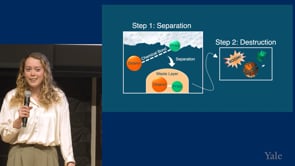
This research presents a simple, low-energy method to remove and destroy PFAS “forever chemicals” from water. By chemically transforming PFAS to behave less like soap, over 98% can be separated and fully degraded, offering a scalable and environmentally friendly solution to widespread drinking water contamination.