This research investigates links between obstructive sleep apnoea, muscle weakness, impaired balance and falls in older adults. Analysis of nearly 25,000 participants identified associations with poorer physical function. A subsequent study involving 140 patients examines whether continuous positive airway pressure therapy improves strength, balance and fall risk.
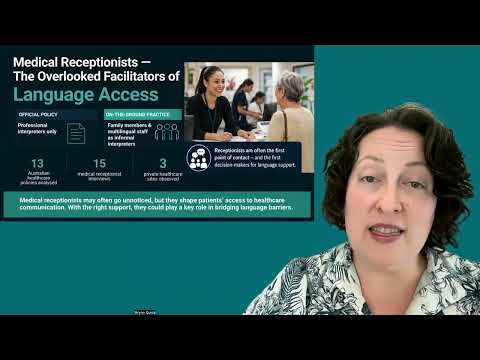
This research examines how Australian medical receptionists manage language barriers in healthcare. Interviews, observations and policy analysis reveal that receptionists frequently rely on family members or multilingual staff rather than professional interpreters, despite official guidance. The findings highlight inadequate training and the need for policies supporting equitable healthcare communication.
This research demonstrates how combining business management and epidemiology can improve hospital infection prevention. Through behavioral interventions, organizational audits, and patient engagement, three initiatives increased hand hygiene compliance by 15%. The work highlights the importance of interdisciplinary thinking, organizational culture, and accountability in creating safer healthcare environments.
This research quantitatively demonstrates disparities in healthcare quality experienced by transgender patients. Using objective clinical quality measures rather than personal testimony alone, it shows transgender patients receive recommended treatments less often. Encouragingly, providers with greater experience treating transgender patients deliver more equitable care, highlighting the importance of education and clinical exposure.
This research examines how continuity of care at Federally Qualified Health Centers affects low-income adults as they age into Medicare eligibility. Using national Medicare and Medicaid data, it investigates whether maintaining long-term primary care relationships improves health outcomes, informing policies that strengthen community healthcare services and support healthy ageing.
This research examines how changing reproductive laws affect access to IVF following the Alabama embryo personhood ruling. Using interviews, observation, and policy analysis, it reveals how legal uncertainty threatens fertility treatment, reproductive autonomy, and healthcare access, while informing policies that better protect reproductive rights and family-building opportunities.
This research critiques the Hatch-Waxman Act, arguing it enables pharmaceutical companies to extend monopolies through “evergreening,” delaying cheaper generics. It proposes legal reforms to restore balance between innovation and access, strengthen FDA oversight, and reduce drug costs, ensuring life-saving medications remain affordable for patients across the United States.
This research examines historical struggles over who controls medical devices in the United States. Using cases like the open-source “EpiPencil,” it traces twentieth-century conflicts among doctors, engineers, industry, and government. The study challenges linear progress narratives and shows how shifting claims to expertise shape medical technology and authority.
This research demonstrates that jaw surgery corrects functional impairments, not just appearance. Studying hundreds of patients shows that correcting jaw disproportions eliminates speech distortions, improves chewing and breathing, and enhances quality of life. The findings challenge the view of jaw surgery as cosmetic, reframing it as vital medical care.
This research uses linked provincial health data to measure the population burden of coeliac disease in Alberta. By identifying diagnosis rates, care gaps, and early-life risk factors, the work informs healthcare planning and policy. The findings highlight rising diagnoses in children and the long-term personal and economic impact of a lifelong, diet-based condition.
Pagination
- Page 1
- Next page