This research investigates how Pseudomonas aeruginosa adapts to drinking water systems before causing human infections. By identifying a previously unknown gene essential for biofilm formation and survival, the work provides new insight into how dangerous bacteria prepare for infection and reveals potential targets for preventing disease before it develops.

This research investigates how lung mucus and its mucin molecules defend against Coccidioides, the fungus that causes Valley fever. By showing that mucins slow fungal growth, the work suggests mucus shapes infection before symptoms appear, opening new possibilities for earlier diagnosis and treatments against Valley fever and other infectious diseases.
This research develops a rapid digital PCR workflow to quantify Salmonella contamination in chicken products. Unlike traditional yes-or-no testing, digital PCR measures bacterial levels directly, enabling faster and more accurate food safety decisions within eight hours. The work improves risk assessment, intervention strategies, and prevention of foodborne illness outbreaks.
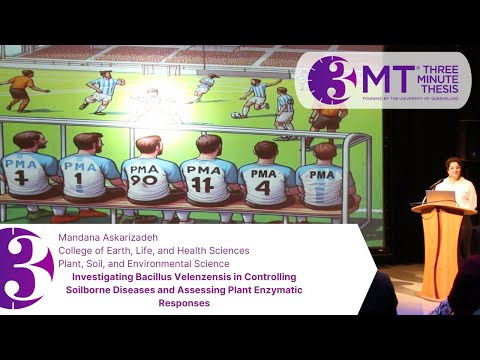
The talk highlights how biology involves unseen interactions and how distinguishing living from dead microorganisms is essential. Using the chemical PMA (propidium monoazide), researchers can identify active pathogens and reduce misinterpretation in diagnostic tests, especially for viruses that cannot be grown in labs. This technique helps improve diagnostics, guide treatments, and advance microbiological research.