
This talk explains how devastating brain diseases such as Parkinson’s disease and dementia may begin not in the brain, but in the gut. The speaker describes how a protein called alpha-synuclein can change shape, form toxic complexes, and spread from cell to cell, traveling from the gut to the brain via neural connections. Once in the brain, these toxic complexes disrupt movement, memory, and thinking. The research identifies a key protein, FABP2, that promotes this harmful process by interacting with alpha-synuclein. By targeting and breaking this interaction early—at the level of the gut—the work aims to prevent neurodegenerative disease before irreversible brain damage occurs, potentially reducing patient suffering as well as medical and societal costs.
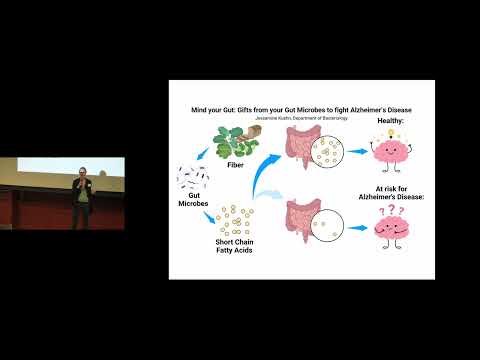
This thesis investigates how gut microbes influence brain health through short-chain fatty acids produced from dietary fibre. Measuring these compounds in stool samples, the research finds lower levels in people at risk for Alzheimer’s disease. The next phase tests whether supplementing short-chain fatty acids can prevent or treat Alzheimer’s in mouse models.

This research develops a novel MRI-based method to detect blood–brain barrier leakage associated with stroke. By comparing pre- and post-contrast brain images, the approach enables early detection, monitoring of treatment response, and risk prediction, offering new possibilities for stroke prevention and improved patient outcomes
My research investigates AU403, a novel LXR agonist, as a potential treatment for frontotemporal dementia. Using mouse brain slice models, the study shows that AU403 restores damaged myelin, improves neuronal communication, and reverses disease-like symptoms, offering hope for a condition with no approved therapies.
This research examines how real-world microplastics and nanoplastics affect human brain immune cells. Using plastics from everyday consumer items, it shows rapid cellular stress and mitochondrial damage linked to neurodegenerative disease. The findings suggest current laboratory studies may underestimate the true health risks of chronic plastic exposure.
Learning a new language, even later in life, can boost attention within a single week and support long-term cognitive resilience. Intensive language learners outperform peers in non-language courses, with benefits spanning ages 18–78. Practising five hours weekly maintains gains, offering a promising, accessible strategy for stroke recovery and dementia delay.

My research uses AI and wearable technology to track brain and body signals such as brain waves (EEG), heart rate, and movement. The goal? Spotting early signs of Alzheimer's and Parkinson's before symptoms show up. Catching these subtle changes could mean helping people sooner, letting them enjoy the everyday moments that matter most