This research examines how race and gender shaped tap dance performance during Hollywood’s Golden Age through the careers of Eleanor Powell and Jeni Le Gon. The thesis reveals how MGM appropriated Black performance traditions while suppressing Black performers themselves, demonstrating that dance and performance are deeply political cultural practices.
This research explores the material culture of the Hindu Pushti Marg tradition by tracing the objects used to care for the child deity Krishna. Through ethnographic work in India and the United States, the thesis reveals how sacred worlds are sustained through often-unrecognized labor crossing boundaries of caste, gender, and religion.
This research examines dismemberment in early modern drama to explore how cultural systems shape human responses to violence. By analysing plays such as Titus Andronicus, the project argues that fear and disgust are historically conditioned rather than purely instinctive, revealing how societies teach audiences to interpret violent imagery across different historical periods
This interdisciplinary art practice explores how video game aesthetics and online fan communities shape artistic identity and self-expression. Through collage, layered media, and game-inspired self-portraits, the artist processes personal medical history while advocating for greater recognition of digital and fan artists within institutional art spaces.
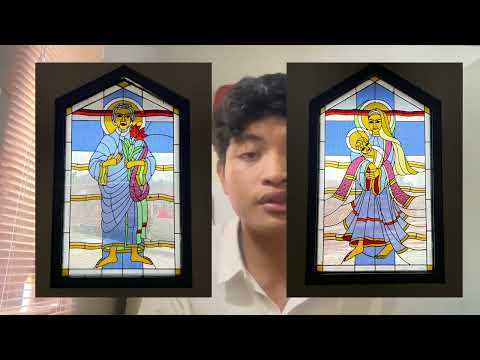
This study analyzes the iconography and meaning of stained glass in the altar of Saint Joseph Catholic Church in Medari, Indonesia. Using Panofsky’s iconographic method, it identifies the depiction of the Holy Family of Nazareth and explains how sacred imagery in altar spaces conveys symbolic, theological, and architectural significance.