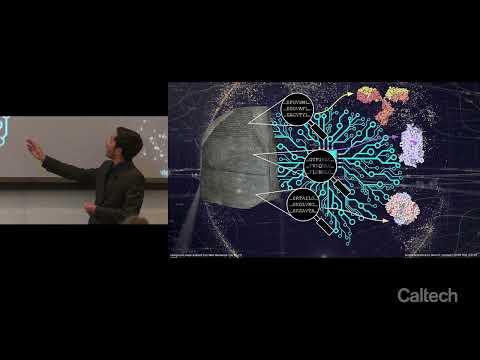
The talk describes using AI language models to decipher the hidden “languages” within millions of natural protein sequences. By learning protein vocabulary, syntax, and grammar, researchers can design new molecules that fight cancer, degrade plastics, capture carbon, and expand biology beyond nature’s rules—advancing medicine, sustainability, and molecular engineering.
This research designs simplified, custom-built proteins to understand how natural proteins work and to create new biocatalysts. By choosing a desired function and designing the amino-acid sequence and structure from scratch, the project aims to develop clean, efficient protein-based alternatives to environmentally harmful industrial chemistry.
This research develops a Minesweeper-inspired algorithm to identify and remove non-essential genes from Mycoplasma genitalium, the smallest known self-replicating organism. The algorithm eliminated 35% of the genome in simulation, offering a path to record-breaking minimal cells and improving bacterial strains used to produce antibiotics, vaccines, fuels, and climate-solution technologies.