
This research applies large language models to decode and design proteins by treating amino acid sequences as biological languages. By identifying hidden structural and functional patterns across massive protein datasets, the work enables creation of novel proteins for medicine, cancer therapy, carbon capture, and environmental remediation beyond naturally evolved biological systems.

Microplastics and nanoplastics pose growing environmental and health concerns, yet their formation pathways remain unclear. This research compiles data from nearly 300 studies to model plastic degradation and identifies key roles of plastic type and weathering process. Lab experiments reveal mechanical wear can directly generate nanoplastics, improving risk assessment and mitigation strategies.
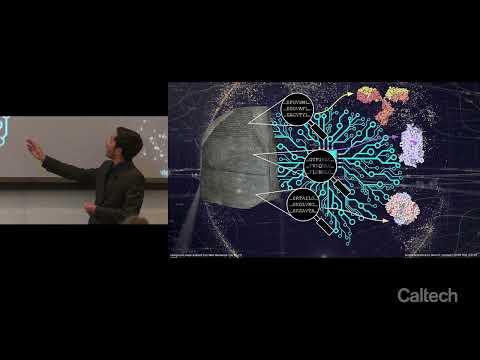
The talk describes using AI language models to decipher the hidden “languages” within millions of natural protein sequences. By learning protein vocabulary, syntax, and grammar, researchers can design new molecules that fight cancer, degrade plastics, capture carbon, and expand biology beyond nature’s rules—advancing medicine, sustainability, and molecular engineering.