
This research develops a new econometric method that captures complex, non-linear relationships while accounting for hidden differences between firms. Applied across 50 industries, it reveals that traditional models underestimate R&D investment by up to 8%, enabling more accurate economic predictions and better-designed innovation, taxation, and regulatory policies.
This research uses data fusion and spatial statistics to combine official and citizen weather data, improving real-time, high-resolution wind forecasts across Ireland. By validating and correcting personal weather stations, the approach reduces uncertainty in renewable energy forecasting and supports efficient grid management toward Ireland’s 2050 net-zero targets.
2025
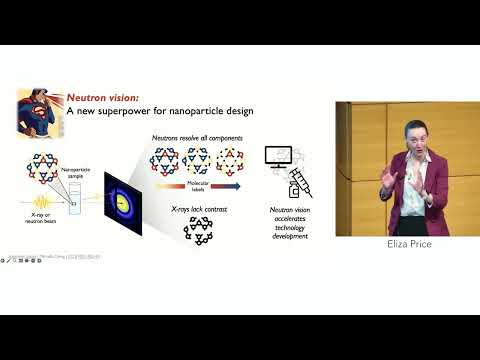
This research uses neutron scattering — “neutron vision” — to reveal the full structure of complex nanoparticles that X-rays can’t fully resolve. By developing statistical methods to optimise experiment design and analyse data, the project enables clearer structural insights, accelerating the development of advanced materials for energy, medicine and nanotechnology.