This research investigates ground locomotion in bats, focusing on the endangered Eastern small-footed bat. Using treadmill experiments in the field, it reveals that bats can move effectively on the ground. Findings suggest ground behavior may be underestimated, with important implications for habitat use, risk exposure, and conservation strategies.

Research explores whether turtles form social relationships by analyzing feeding interactions in a marsh. Using baited traps, social networks were constructed to test drivers of association. Species predicted grouping preferences, size did not, and no sex-based preference emerged. No evidence for “friendship” was found, but findings highlight overlooked reptile sociality and conservation relevance.

This research shows that damselfly species lose color variation when living together, adopting distinct colors to avoid misidentification and conflict. Experiments reveal they cannot distinguish species when polymorphic, leading evolution to favor visual divergence. The findings illustrate how natural selection can reduce aggression and promote coexistence between closely related species.

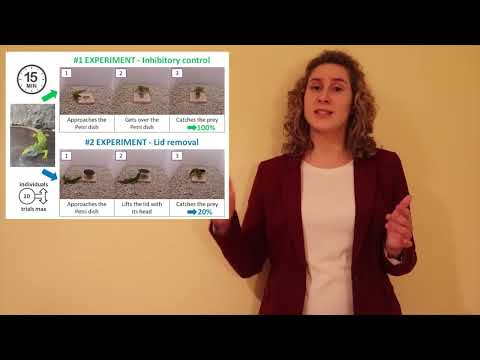
This research tests cognitive abilities in European green lizards using inhibitory control and problem-solving tasks. All males solved the detour challenge, and two solved the more complex lid-removal task, demonstrating that reptiles have developed learning abilities. The study advances understanding of reptile cognition and its role in the evolution of animal intelligence.

This research examines whether addictive plant alkaloids like caffeine, nicotine, and morphine alter pollinator behavior. Using robotic flowers, it shows bees prefer drug-spiked nectar, learn cues faster, and may make suboptimal feeding choices. The work explores whether pollinators can develop dependency or withdrawal, suggesting plants may chemically manipulate their pollinators.