This research combines bio-inspired robotics and reinforcement learning to develop adaptable amphibious robots modeled after sea turtles. By learning through trial and error across diverse terrains, these robots can adjust their movement strategies in real time, improving performance in applications such as environmental monitoring, search and rescue, and agriculture.
2021
This research develops programmable active materials that function like soft robots without electronics or external control systems. Using 3D-printed liquid crystal elastomers, the work engineers materials that sense temperature and autonomously deform, fold, and locomote, demonstrating how microscopic material structure can be programmed to produce complex robotic behavior.

2025
This research explores how artificial intelligence systems can continue learning without forgetting previously acquired knowledge. Instead of erasing old information, the proposed method compresses knowledge into more efficient representations, allowing AI systems such as self-driving cars to adapt safely to new environments while avoiding dangerous performance failures during learning.
2026
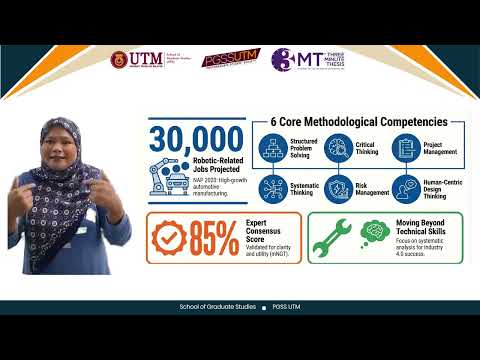
This research addresses the growing skills gap in Malaysia’s automotive robotics sector. It develops a competency framework emphasizing problem-solving, critical thinking, and structured methodologies. Validated by experts, the framework aligns education with industry needs, helping graduates better prepare for automation-related jobs and improving workforce readiness in a rapidly evolving industry.
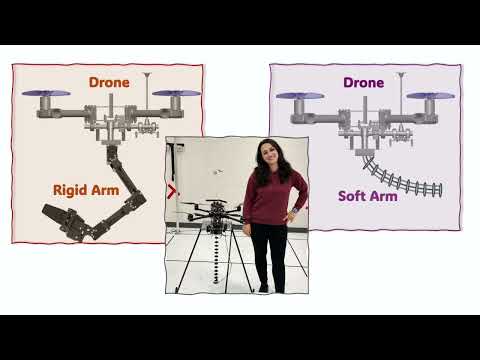
This research develops drones with soft robotic arms capable of safely grasping and transporting objects in challenging environments. By combining predictive modelling with visual feedback, it overcomes control challenges associated with soft materials. The work advances intelligent, adaptive aerial robotics for applications such as emergency delivery and hazardous environments.
2025
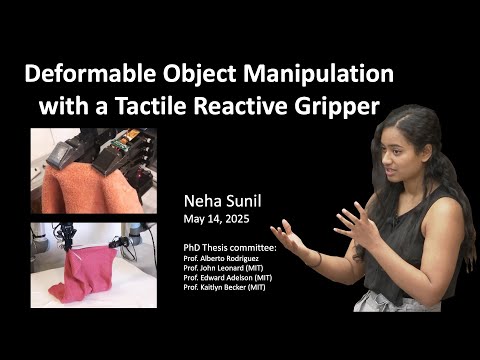
This research presents a modular visuotactile robotic system for manipulating deformable objects such as cables, towels, and garments. Unlike rigid-object manipulation, deformables pose challenges due to occlusion, complex dynamics, and high variability. The system combines vision for global context and tactile sensing (GelSight) for precise local control, enabling tasks like cable tracing, cloth edge following, towel folding, and garment handling. It uses reactive control, learned dynamics (LQR), affordance models, and dense correspondence to generalise across tasks and objects. A key innovation is shifting from global state estimation to local, feedback-driven manipulation, improving robustness, efficiency, and real-world applicability in domains like manufacturing, healthcare, and assistive robotics.
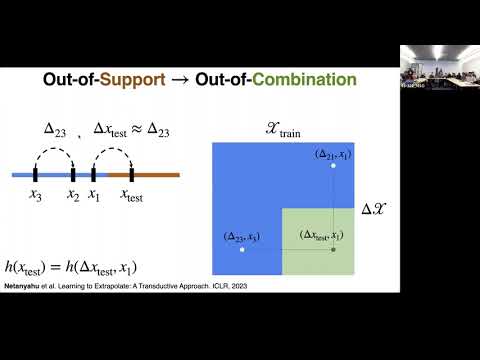
This defense addresses generalization under distribution shift with limited data. It introduces (1) diffusion-based inverse task inference that recovers a task embedding from a few demonstrations, enabling compositional generation without fine-tuning; and (2) bilinear transduction that converts out-of-support inputs into out-of-combination problems, yielding zero-shot extrapolation in robotics and property prediction.
2025
This research explores why people form emotional bonds with social robots. Through forum analysis and a year-long self-study, it shows that humans transfer emotion to robots and experience reciprocal affect. The work proposes a new framework for understanding human–robot companionship as emotionally co-created, not purely technological.
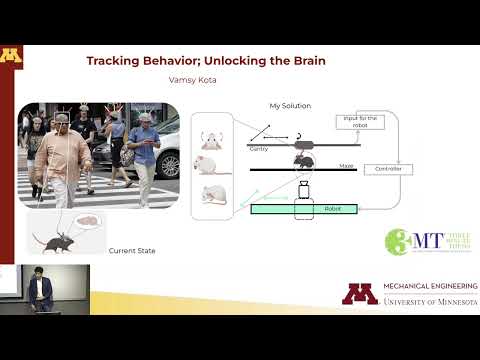
Understanding how the brain controls behavior is key to studying neurological disease. This research introduces a high-speed robotic system that tracks mouse behavior in fine detail. By synchronizing precise behavioral data with brain activity recordings, it enables researchers to link specific neural regions to actions, improving insight into disorders like Parkinson’s and Alzheimer’s.

This research develops an AI-powered, multi-sensor drone system to detect butterfly landmines more safely and efficiently. By fusing sensor data into confidence-scored maps, it accelerates demining, reduces risk to operators, and supports civilian safety, land reuse, and humanitarian recovery in post-conflict regions.