
This research develops improved methods for exploring and visualising global country-level data over time. By identifying patterns, trends, unusual observations and differences between countries, and addressing missing data through the R package ‘wdiexplorer’, the work aims to support researchers and policymakers in making better informed, data-based decisions across multiple sectors.
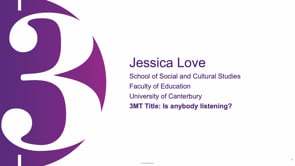
This winning presentation examines how disabled young adults experience the transition from school to adulthood. Using accessible interviews and layered multimodal analysis, it captures communication beyond speech. Findings show that belonging, relationships and purpose matter, but being listened to is the top priority, and future planning should begin with people’s goals.

2020
This research investigates how schools can reduce children's susceptibility to online misinformation. While content moderation and fact-checking have limitations, evidence suggests critical thinking education significantly improves children's ability to identify fake news. The project aims to develop school-based interventions that strengthen digital literacy and promote safer online behaviour.

This study explores how mindfulness can support student-athlete well-being in high-pressure sporting environments. Through interviews, course analysis, and coaching reflections, the research found that mindfulness strengthens personal agency, emotional regulation, and holistic self-identity. The findings informed the development of a mindfulness-based curriculum for athletes and coaches.

2026
This research investigates whether increasing female political representation affects labour market participation and education outcomes. Using electoral reforms in Italy as a natural experiment, the study finds that greater female representation increased workforce participation among working-age women while encouraging younger women to remain in education, demonstrating broader economic and social effects of political representation.
2026
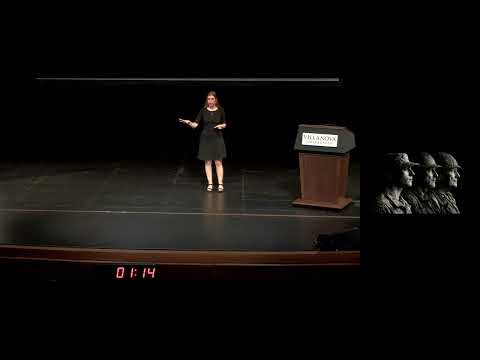
Career paths and life patterns are often transmitted across generations not through explicit instruction but through embodied habits and daily behaviors. Analyzing a play about intergenerational military service, this research shows how subconscious routines shape identity, highlighting how recognizing these patterns allows individuals to consciously break cycles or build new legacies.
2026
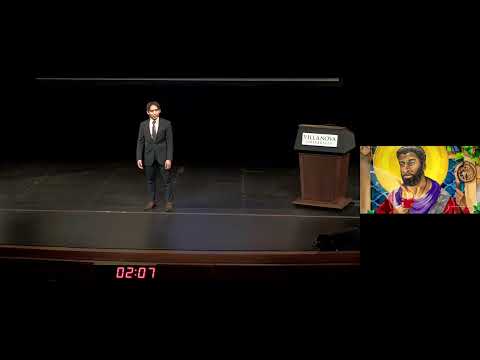
This research critiques AI-based classroom monitoring, arguing that while algorithms can measure behavior, they cannot interpret meaning. It proposes the “Augustinian limit,” where AI supports logistics but human judgment guides interpretation. The framework protects authentic learning moments, emphasizing that true education relies on human insight, not just data-driven evaluation.

This research examines how social networks influence life outcomes, showing that cross-income friendships significantly improve earnings, well-being, and social trust for low-income individuals. Using large-scale data, it demonstrates that environment shapes opportunity, highlighting the importance of institutions like universities in fostering connections that can transform lives and promote social mobility.
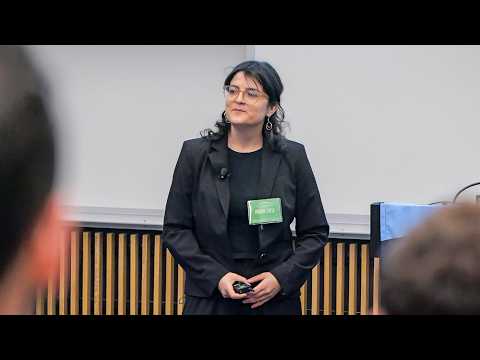
This talk reframes mathematics as a creative, pattern-based discipline rather than rote calculation. Through research in topology and prison education initiatives, it highlights math’s role in fostering curiosity, resilience, and critical thinking. The speaker argues that mathematical thinking benefits everyone, promoting perseverance and empathy beyond academic or professional contexts.

Partner choice increasingly reflects shared career aspirations, intensifying income inequality. Using Danish registry data and machine learning, this research shows assortative matching by education and career focus has risen since the 1980s. If pairing patterns had remained unchanged, today’s income inequality would be over 40% lower, highlighting family formation as a key economic force.