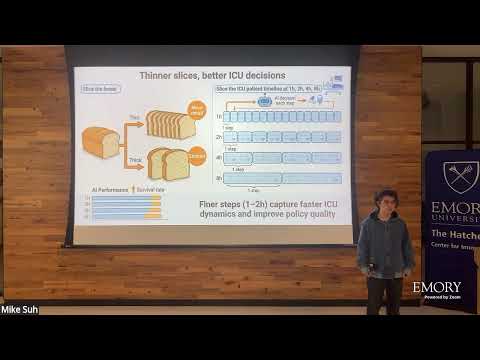
This research investigates how the choice of time interval affects reinforcement learning models for sepsis treatment in intensive care. By comparing one-, two-, four-, and eight-hour patient timelines, it demonstrates that shorter intervals better capture patient dynamics, improve estimated survival outcomes, and may enable more effective AI-assisted clinical decision-making.

This research develops a machine learning system that automatically assesses the quality of wearable sensor data before it is used for clinical decision-making. By filtering unreliable signals and distinguishing noise from genuine health events, the approach aims to improve diagnostic accuracy, reduce false alarms, and enable trustworthy medical use of wearable technologies.