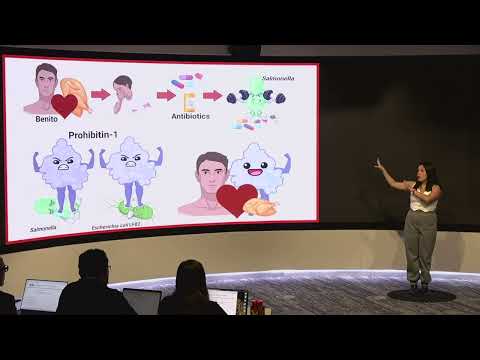
Antibiotic-resistant bacteria like Salmonella cause millions of deaths worldwide. This research explores prohibitin 1, a mitochondrial protein, as an alternative defense. Mouse studies show that higher prohibitin 1 levels protect against bacterial infections, offering a potential non-antibiotic treatment to combat infections and reduce antibiotic resistance.

This research investigates how the human microbiome protects against Streptococcus pneumoniae. Focusing on Streptococcus mitis, it shows how beneficial bacteria detect chemical signals from pathogens and block infection. Understanding when this microbial “security system” succeeds or fails may lead to new strategies for preventing disease.

This research explores how bacteria choose between free-swimming and biofilm lifestyles. Studying Vibrio cholerae reveals that bacterial populations hedge their bets—some cells disperse while others remain protected. This collective decision-making helps bacteria survive threats and plays a key role in infection and transmission.

Variants weaken current COVID vaccines because they target parts of the spike protein that mutate. This project uses nanoparticles displaying engineered versions of the conserved RBD region to steer the immune system toward making broadly protective antibodies. Computational design helps optimize immune targeting, potentially eliminating yearly boosters and protecting against future coronaviruses.

This research uses agent-based modelling (ABM) to simulate infectious disease spread in regions like Nigeria, enabling policymakers to predict outbreaks, test interventions, and allocate limited resources proactively. The low-cost modelling approach supports governments with constrained budgets and offers a sustainable, data-driven tool for preventing large-scale infections and improving global public health.

Human T-cell Leukemia Virus (HTLV) is a highly neglected virus that causes leukemia and neurodegeneration, with no current treatment. The researcher has developed siRNA-based RNA drugs that suppress the virus by up to 90%, prevent reactivation, and can be delivered via a nasal spray. This breakthrough could become the first effective antiviral therapy for HTLV.
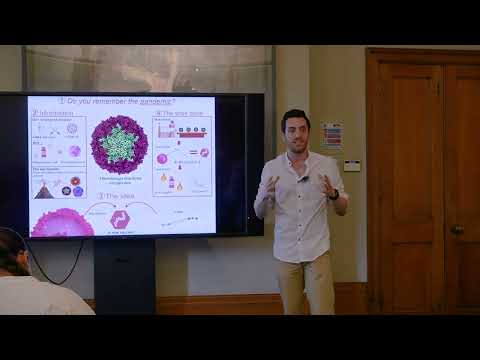
This research aims to solve the major weakness of mRNA vaccines—the need for constant cold storage—by packaging them inside ultra-stable protein “boxes” called encapsulins. These naturally robust containers protect mRNA in extreme environments. A working prototype now exists, offering the potential for globally distributable, freezer-free vaccines that remain effective anywhere.

This research investigates how Plasmodium falciparum invades human red blood cells. By focusing on the neglected role of red cell surface structures, it aims to uncover molecular interactions essential for invasion. Understanding these mechanisms may guide the development of new treatments for drug-resistant malaria, a disease killing a child every minute.