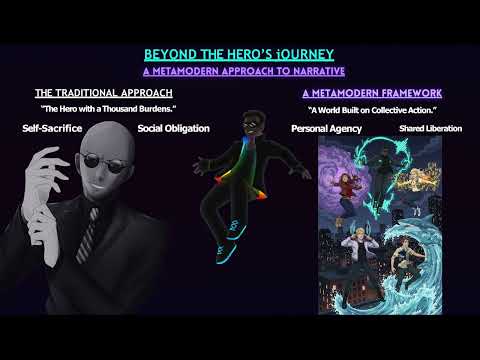
This research argues that traditional self-sacrificing hero narratives no longer fit a complex, modern world. Using an animated screenplay as a case study, it proposes a metamodern approach centered on collective liberation. The work blends critical theory and creative practice to show how contemporary storytelling can inspire collaboration rather than individual heroism.
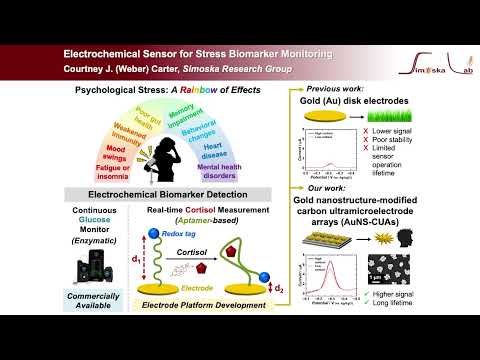
This research develops an electrochemical sensor to continuously monitor stress by detecting cortisol, a key stress hormone. Using DNA aptamers and nanostructured electrodes, the sensor overcomes traditional detection limits, improving signal strength and durability. The technology offers a noninvasive method for long-term stress tracking to support prevention and treatment.
Cancer often becomes resistant to treatment due to the protein CDK8, which helps reprogram cancer cells. Traditional inhibitors fail because CDK8 still acts as a structural scaffold. This research develops targeted degraders that use the cell’s recycling system to eliminate CDK8 entirely, preventing resistance and improving future cancer therapies.
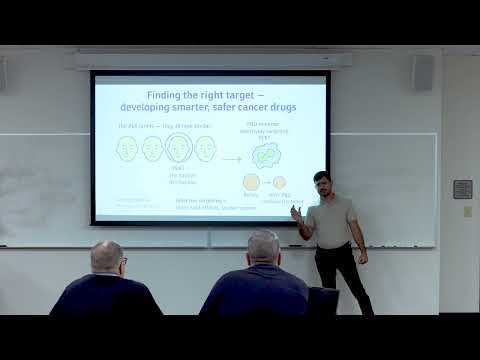
This research targets cancer more precisely by focusing on a unique region of the PLK1 protein that drives tumor growth. By designing drugs that bind specifically to this domain using AI and laboratory testing, the approach aims to kill cancer cells while sparing healthy tissue.