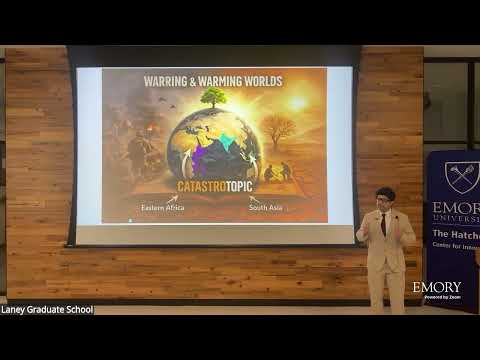
This dissertation examines contemporary literature from South Asia and Eastern Africa to explore how narratives of war and climate crisis reshape our understanding of survival, care, and belonging. Introducing the concept of the catastrophopic, it argues that Global South literature offers powerful frameworks for ecological responsibility and collective world-making.
This research examines how vulnerable communities can finance renewable energy transitions without relying on fossil fuel industries. By analyzing international climate finance agreements, it proposes fairer, more accessible funding structures that empower marginalized regions—such as the Niger Delta—to pursue clean energy while addressing climate justice and inequality.