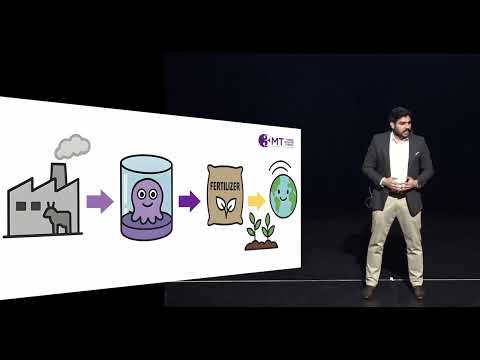
This research uses purple bacteria to treat dairy wastewater, removing nitrogen and phosphorus while producing nutrient-rich biomass. The process reduces pollution and transforms waste into potential biofertilizer, offering a sustainable alternative to chemical fertilizers and a circular solution for dairy farming and agriculture.

2025
This research evaluates hydroponic farming as a sustainable food production strategy. By combining interviews, environmental modeling, and economic simulations, it compares hydroponic and conventional agriculture, finding reduced water use but higher energy demands. The work identifies conditions under which hydroponics can support farmers, communities, and environmental goals.

This research quantifies plastic use in U.S. agriculture, revealing 1.6 million metric tons used annually across crops and products. By identifying major sources and challenges to recycling, the work aims to guide sustainable alternatives, reuse, and recycling strategies that balance environmental, economic, and social needs in farming.

2025
This research tackles nitrous oxide emissions from agricultural soils, a major driver of global warming. By modifying manure application practices—mixing manure into soil or adding biochar—the study enhances soil microbes that consume nitrous oxide, reducing emissions by 60–70% through improved microbial balance and reduced gas escape.
Chocolate production is declining due to climate change and disease, threatening global supply. Ecuador’s cacao variety CCN-51, created by Omero Castro Zurita in 1965, offers a disease-resistant, high-yield solution. This MFA documentary project highlights his overlooked legacy and investigates whether CCN-51 can sustainably address the global cocoa shortage.

The research promotes interseeding—planting cover crops alongside cash crops—to help farmers in short-season climates protect soil, retain nutrients, and boost resilience. By identifying optimal planting times, crop mixes, and methods, the work dispels myths about competition and shows that interseeding can improve yields and soil health without compromising crop quality.