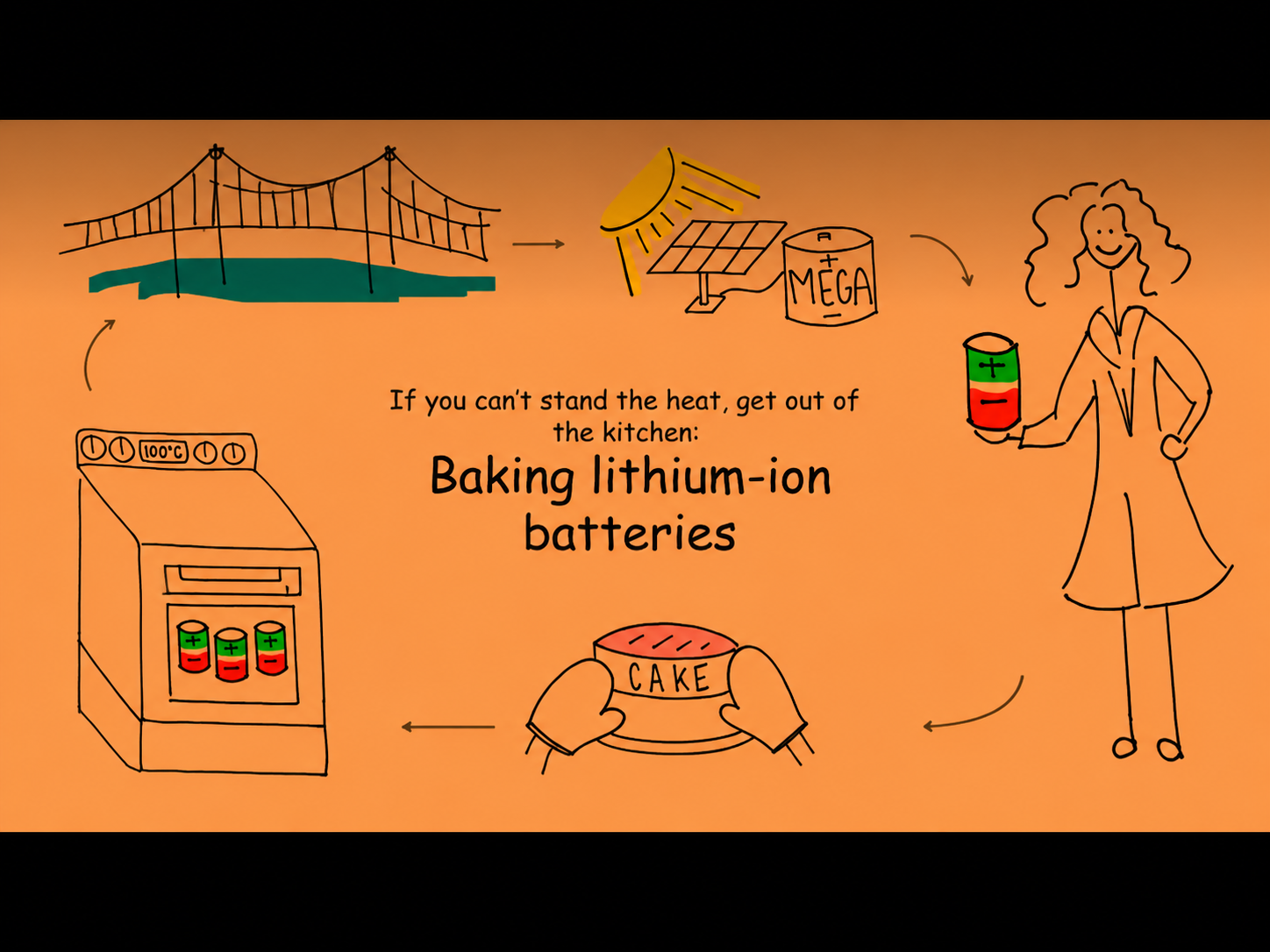
This research investigates how to develop lithium-ion batteries capable of lasting decades in renewable energy storage applications. Using accelerated ageing experiments at elevated temperatures, the researcher studies battery degradation and predicts long-term performance. Findings suggest batteries surviving 18 months at 100°C could achieve approximately 70 years of room-temperature operation.
Muhammed Muddasar investigates converting waste heat into electricity using lignin, a by-product of the paper and pulp industry. His research develops lignin-based membranes for heat-powered rechargeable batteries, potentially harvesting energy from body temperature differences. Applications include industrial Internet of Things sensors, wearable biomedical devices and sustainable energy technologies worldwide.
This research develops a seawater-compatible electrolyzer that uses state-of-the-art materials with an integrated deionization layer powered by waste heat. The system enables efficient hydrogen production from seawater, supporting portable refueling stations for hydrogen-powered marine UAVs and advancing clean, sustainable energy for offshore operations.
This research investigates zinc batteries as a safer, cheaper alternative to lithium batteries. By studying the microscopic passive layer formed between zinc and electrolyte, it identifies mechanisms that improve performance and prevent failure. The work aims to enable more reliable, ethical, and fire-safe energy storage technologies through detailed materials analysis.
This research compares ionic polymers to dancers on a crowded floor. When molecular rotation and movement are restricted, viscosity rises and electrical conductivity drops. Using physics-based simulations, the study shows how molecular size and freedom of rotation control material performance, helping guide the design of safer, more efficient batteries.
This research transforms agricultural waste into biochar-based activated carbon for batteries and supercapacitors. By replacing costly materials, it improves energy storage performance while reducing costs, offering a sustainable and affordable solution that turns waste into valuable resources for future energy technologies.
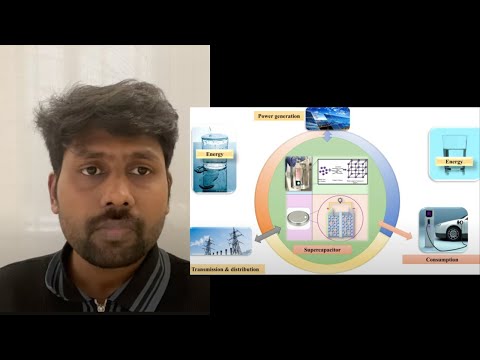
Batteries charge slowly and degrade over time. This research develops advanced supercapacitors using novel 2D materials and water-based electrolytes. The resulting devices charge rapidly, store five times more energy than conventional supercapacitors, last over 50,000 cycles, and offer a fast, affordable alternative for electric vehicles and energy storage.
This research develops a high-performance supercapacitor using a conductive iron-based metal–organic framework. By overcoming low electrical conductivity, the material enables rapid charging and long cycle life, achieving storage performance three times higher than existing designs. The work advances next-generation energy storage solutions beyond conventional batteries.
This research develops improved catalysts that convert atmospheric carbon dioxide into sustainable fuel. By analysing how molecular design affects reaction efficiency, selectivity, and durability, the work creates strategies to accelerate the chemical process and prevent breakdown. The findings support large-scale renewable energy storage and help integrate clean fuels into future energy systems.
This research uses atomic-scale computer simulations to design safer, more efficient battery electrolytes. By modelling ion movement like a “river” inside a battery, the project identifies top-performing materials before laboratory testing. The goal is to create faster-charging, higher-capacity, non-toxic batteries that support global renewable-energy transitions and a net-zero future.