
This research investigates how electrolyte chemistry influences battery performance through the formation of the solid electrolyte interface (SEI). By developing fluoride-rich electrolytes for lithium metal batteries, the work improves battery stability and efficiency, advancing renewable energy storage, electric transportation, chemical manufacturing, and future energy technologies beyond conventional lithium-ion systems.
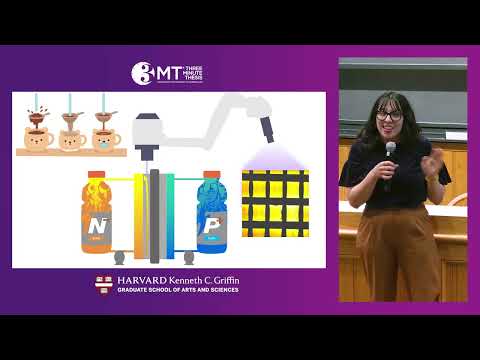
This research improves redox flow battery efficiency by optimizing porous electrode structure. Using confocal microscopy and 3D-printed models, it shows that combining dense regions with open channels and controlling fiber angles enhances electrolyte flow and charge formation. These insights enable better energy storage, supporting reliable renewable energy systems.