This research develops a spatial “GPS” for lung cancer screening by mapping CT scans into a shared coordinate system. By identifying high-risk regions for malignant nodules, it supports radiologists and AI in improving diagnostic accuracy, decision-making, and interpretability, transforming screening from broad search to targeted, data-driven precision.
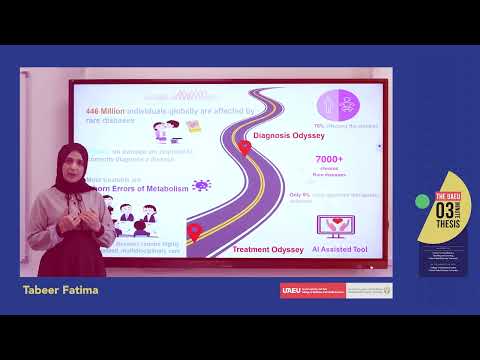
This research uses artificial intelligence to support treatment decisions for rare diseases. By organizing verified medical knowledge into an AI assistant, it helps clinicians and families access reliable guidance, reducing the treatment odyssey and transforming rare-disease diagnoses into clearer, more hopeful care pathways.