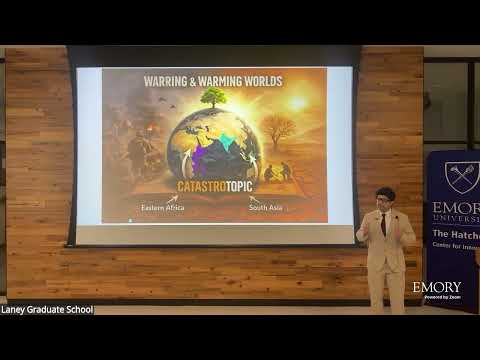
This dissertation examines contemporary literature from South Asia and Eastern Africa to explore how narratives of war and climate crisis reshape our understanding of survival, care, and belonging. Introducing the concept of the catastrophopic, it argues that Global South literature offers powerful frameworks for ecological responsibility and collective world-making.
This research explores the material culture of the Hindu Pushti Marg tradition by tracing the objects used to care for the child deity Krishna. Through ethnographic work in India and the United States, the thesis reveals how sacred worlds are sustained through often-unrecognized labor crossing boundaries of caste, gender, and religion.