2025
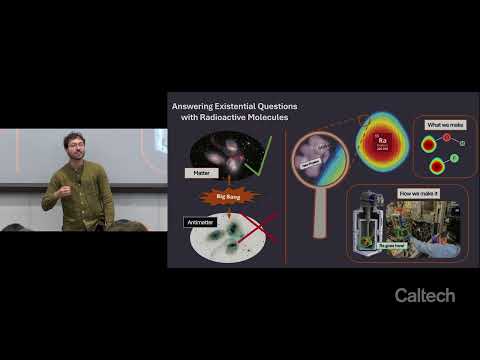
This research develops tabletop methods for studying rare radium-containing molecules to search for broken symmetries between matter and antimatter. Because radium’s asymmetric nuclear structure strongly amplifies subtle physical effects, these molecules provide highly sensitive probes for new physics that could help explain why matter exists in the universe after the Big Bang.