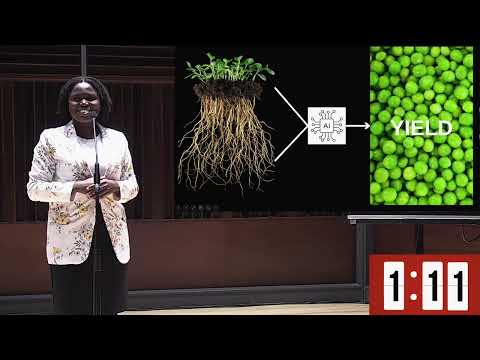
My research uses field images to predict crop yield, leveraging machine learning techniques to extract patterns and features correlating yield.  These features include plant health indicators, growth stages,  or canopy coverage. I am particularly interested in using these features to develop models  that improve the accuracy of yield prediction, helping farmers make  data-driven decisions. My approach considers temporal changes in the crop, capturing how its characteristics evolve. My work contributes to precision agriculture, a field that seeks to optimize resource use, increase productivity, and promote sustainability in farming. My research has the potential to transform traditional agricultural practices by integrating advanced AI methods.

This talk explains research that teaches legged robots how to walk reliably using machine learning, computer vision, advanced control theory, and Lyapunov-based safety guarantees. By improving robot stability on complex terrain, the work moves us closer to versatile, household multi-purpose robots capable of performing everyday chores safely and independently.

Mel-AI is an artificial intelligence system designed to assist pathologists in distinguishing melanoma from benign moles. By training computer-vision models on 520 cases, the system reached 96% accuracy and interpretable outputs. It offers scalable, objective quality assurance, reducing misdiagnosis risk and improving melanoma detection in high-incidence countries like Australia.